The United States launched new airstrikes on Iranian targets on Tuesday, September 1, 2026, and Tehran responded with missiles and drones, reigniting hostilities that had briefly eased after a weekend exchange of fire. U.S. Central Command (CENTCOM) said its strikes hit Islamic Revolutionary Guard Corps (IRGC) assets, including air-defence sites, radar systems, maritime facilities, mine-laying capabilities and communications nodes.
Iranian state media reported that a civilian airport in the southern city of Jiroft, in Kerman province, was also struck, with a projectile landing outside the runway and no casualties or infrastructure damage reported. Local officials and the Iranian Red Crescent said another strike hit a home hosting a wedding in Sirik, killing at least five people and wounding dozens, including women and children.
In retaliation, Iran launched missiles and drones at multiple sites across the region. The UAE said it intercepted an Iranian drone over its waters, and U.S. sites in Jordan came under missile fire that was intercepted. Iranian state TV and the semi-official Tasnim agency described the response as a “decisive operation” targeting U.S. bases and key facilities, with Tehran warning of “devastating blows” if the escalation continues.
Why tensions spiked again
CENTCOM said the latest wave followed recent IRGC attempts to attack commercial shipping in the Strait of Hormuz and U.S. service members in the region. The escalation builds on a weekend exchange of fire—the first since late July—including U.S. strikes on rocket launchers on Larak Island in the Strait of Hormuz on Sunday.
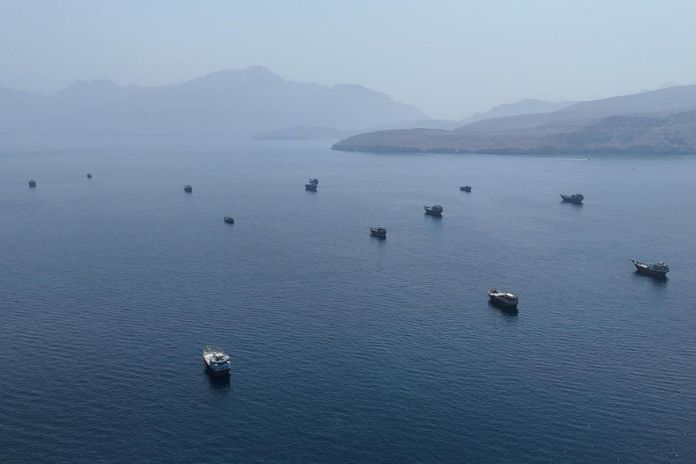
On Monday, two tankers leaving the Strait of Hormuz were attacked, heightening fears over the vital global oil supply waterway that Iran has effectively closed to shipping. President Donald Trump framed Tuesday’s strikes as retaliation for Iranian sea-mining attempts in the Strait of Hormuz and missiles fired at a U.S. base in Jordan, warning of more attacks if Tehran retaliates.
Ceasefire deal in the balance
Iran has repeatedly pointed to a June interim memorandum of understanding that called for an immediate ceasefire and opened a 60-day negotiation window for a wider agreement—talks that ultimately collapsed. At the Shanghai Cooperation Organization summit in Kyrgyzstan on Tuesday, President Masoud Pezeshkian said Iran would “immediately reciprocate” if the U.S. returned to its commitments under the MOU.
The MOU reportedly included provisions for Iran to clear mines from the Strait of Hormuz and allow shipping, while the U.S. would end its naval blockade, lift certain sanctions, issue waivers for Iranian oil exports and work on a reconstruction package—measures that have not been fully implemented.
Markets and regional fallout
Oil prices jumped as traders priced in the risk of a wider regional war and further disruption to Gulf shipping, with Brent crude moving above $95 a barrel. U.S. Treasury yields also surged, with the 10-year yield climbing past 4.8%, as investors reassessed inflation and rate-cut expectations in light of higher oil prices and geopolitical risk.
The escalation has complicated U.S. domestic politics ahead of November’s midterm elections and drawn public statements of support for Tehran from Moscow, raising stakes for a broader confrontation.
What to watch next
- Shipping in the Gulf: Whether Iran follows through on threats to further restrict oil exports or mining in the Strait of Hormuz.
- Diplomatic off-ramps: Any signs that Washington and Tehran will return to the June ceasefire framework or pursue back-channel talks.
- Market reaction: How long oil stays elevated and whether bond yields keep rising on inflation and risk concerns.