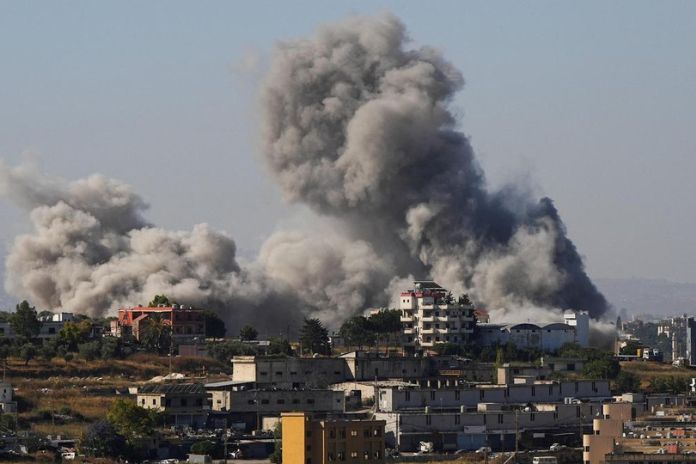
For the tenth straight night, U.S. forces carried out strikes on Iranian military sites as tensions spiralled across the Gulf and commercial shipping in the Strait of Hormuz came under direct attack. The U.S. said its operations targeted Iranian command centres, maritime capabilities, missile and drone launch sites, and air-defence systems in an attempt to blunt Tehran’s ability to threaten tankers and other merchant vessels transiting the world’s most important energy chokepoint. Meanwhile, Iran’s forces struck at least one commercial tanker in the Strait of Hormuz, a move that has intensified fears of wider disruption to global trade and oil markets.
The U.S. military described the strikes as aimed at degrading specific Iranian systems used in recent attacks on shipping through international waters near the strait. U.S. statements framed the campaign as necessary to reopen and secure shipping lanes and to deter further assaults on neutral vessels, while emphasizing that operations would continue as ordered by U.S. leadership. Iranian state media reported explosions and damage at multiple sites inside Iran and said its actions — including the tanker strike — responded to what Tehran calls ongoing aggression and violations of its security.
Shipping and insurers have already felt the impact. Over the past weeks, vessels have been forced to reroute or suspend transits, crews have abandoned ships after strikes, and maritime insurers have raised threat levels and premiums for voyages through the region. Because around one-fifth of the world’s seaborne oil passes through the Strait of Hormuz, any sustained disruption risks feeding through into higher energy costs and tighter insurance terms for carriers, amplifying the economic consequences beyond the immediate battlefield.
The human and geopolitical stakes are significant. Reports of strikes reaching inland Iranian cities raise the risk of civilian casualties and deepen the prospect of a wider regional conflagration if allied states or proxy forces respond. Diplomacy has continued even as military actions mount — mediators and regional actors have called for de-escalation and have engaged in shuttle talks — but progress remains fragile while both sides exchange kinetic blows. The conflict also pressures Gulf states and major energy consumers to clarify positions and take steps to protect shipping and economic interests.
What to watch next: whether Washington sustains nightly strikes or shifts to a different tempo, and whether Iran expands attacks on commercial shipping or military targets beyond the Gulf. Markets will monitor tanker traffic, insurance notices, and statements from regional capitals; any further high-profile shipping incidents would likely deepen market reactions and force wider international involvement to secure maritime passages. The immediate horizon therefore combines military intensity with urgent diplomatic stakes for global trade.