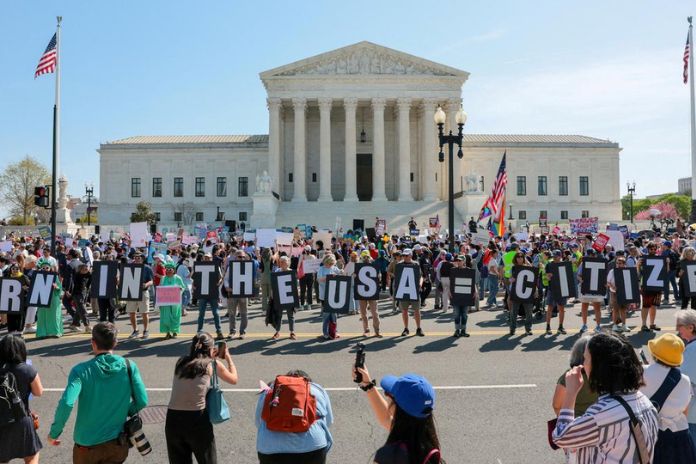
In a major constitutional decision, the U.S. Supreme Court has rejected President Donald Trump’s effort to limit birthright citizenship, reaffirming that almost everyone born on U.S. soil is a citizen under the Fourteenth Amendment. The ruling blocks the administration’s executive order that sought to strip citizenship from children born to noncitizen parents and preserves decades of legal precedent on birthright citizenship.
The Court’s majority explained that the Citizenship Clause of the Fourteenth Amendment — which states that “all persons born or naturalized in the United States, and subject to the jurisdiction thereof, are citizens” — covers children born in the United States even when their parents are in the country without authorization or with temporary status. The decision makes clear that an executive order cannot override the constitutional text or longstanding judicial interpretations that have granted automatic U.S. citizenship at birth to nearly all who are born on American soil.
The ruling was a notable rebuke to the administration’s immigration agenda. It restores the status quo and prevents immediate changes that would have affected thousands of children and families across the country. The Court’s opinion emphasizes that any change to the scope of birthright citizenship must come through Congress or a constitutional amendment, not through unilateral executive action.
The decision was reached by a clear majority of the justices, with three dissenting opinions expressing disagreement about the proper interpretation of the Citizenship Clause and the authority of the executive branch. The split underscores continuing legal and political divisions over immigration policy, but the majority’s ruling now serves as the controlling precedent for lower courts and federal agencies.
For immigrant families and their advocates, the ruling offers immediate relief and legal certainty. Children born in the United States will continue to be recognized as citizens at birth, preserving access to rights and benefits tied to citizenship, such as education and legal protections. Civil-rights organizations that challenged the executive order hailed the decision as a victory for constitutional protections and family stability.
Politically, the ruling is likely to intensify debate rather than end it. Supporters of stricter immigration controls criticized the Court’s decision and reiterated calls for legislative changes to immigration law. Conversely, defenders of existing citizenship rules called on lawmakers to focus on humane and sustainable reforms that respect constitutional guarantees.
Legally, the ruling clarifies the boundaries between constitutional text and executive power. By grounding citizenship in the Fourteenth Amendment, the Court signaled that fundamental rights established in the Constitution cannot be altered by executive fiat. Any attempt to redefine who qualifies for citizenship at birth would require a different—and more difficult—path through the constitutional or legislative process.
The Supreme Court’s decision will have global resonance, too, as it stabilizes legal status for many families with transnational ties and reassures immigrant communities. For journalists and policymakers, the ruling sets a clear baseline: birthright citizenship remains a constitutional guarantee in the United States unless Congress or the people through amendment choose otherwise.