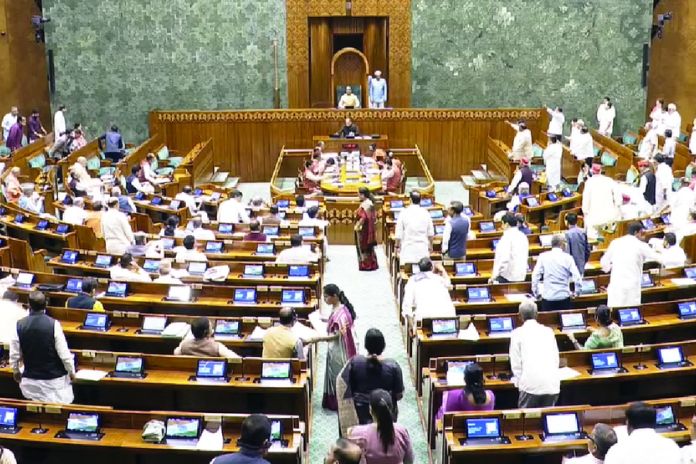
The Lok Sabha on Wednesday passed the Mines and Minerals Amendment Bill 2026 by voice vote without any discussion, even as Opposition MPs rushed into the Well of the House and raised slogans the moment the bill was introduced.
Coal and Mines Minister G Kishan Reddy moved the bill to amend the Mines and Minerals (Development and Regulation) Act, 1957 (MMDR Act), but the House could not hold a normal debate due to the noise and protests. Deputy Speaker Jagdambika Pal repeatedly asked members to maintain decorum, but the ruckus continued, and proceedings were adjourned for the day after the bill was pushed through.
What the 2026 amendment seeks to change
The core change in the Mines and Minerals Amendment Bill 2026 is a new Section 9D in the MMDR Act that curbs states’ power to tax mineral rights and mineral-bearing lands.
Key provisions include:
- Restriction on state levies: No state government can impose any tax, cess or other levy on (i) mineral rights or (ii) mineral-bearing lands, whether based on mineral quantity, value, royalty or any other parameter, except under conditions or restrictions prescribed by the Centre.
- Invalidation of pending dues: Any such levy that has not been deposited with or recovered by a state before the amendment comes into force will be deemed invalid “at all material times”.
- No refund for amounts already paid: Levies already deposited with or recovered by states before the amendment will not be refunded.
- Central rule-making power: The Centre will prescribe the conditions or restrictions under which states may impose such taxes, effectively giving New Delhi final say over this part of the fiscal regime.
Alongside these federalism-related changes, the government has described the bill as part of a broader push to boost exploration and production of critical and strategic minerals, simplify leasing rules, and attract investment into the mining sector.
Why the Opposition is angry
Opposition leaders argue that the amendment undermines the fiscal autonomy of states and tilts the federal balance in favour of the Centre. RSP’s N K Premachandran and others contended that mineral resources are a state subject under the Constitution and that curtailing states’ taxing powers violates federal principles.
The protests in the Well were also linked to wider tensions in the Monsoon Session, including anger over the Special Intensive Revision (SIR) of electoral rolls in Bihar, which has dominated Opposition demands for debate.
Government’s rationale
The government says uniform rules on levies will bring “fiscal certainty” for mining companies, reduce disputes over state taxes, and support national economic growth and job creation in the sector. Ministers have previously linked MMDR reforms to goals such as:
- Encouraging private players with better technology
- Allowing leaseholders to add more minerals, including critical ones like lithium, cobalt and nickel, to existing leases without paying extra royalty
- Removing the cap on sale of minerals from captive mines
- Expanding the scope of the National Mineral Exploration and Development Trust to fund more exploration, including overseas projects
Officials argue that these steps are needed to reduce India’s import dependence on critical minerals used in batteries, electronics and defence.
What happens next
With passage in the Lok Sabha, the Mines and Minerals Amendment Bill 2026 will now go to the Rajya Sabha. If both Houses approve it and the President gives assent, it will become law and the new restrictions on state levies will come into force from the date notified by the Centre.
For now, the manner of passage—without debate and amid loud protests—has added another flashpoint to an already heated Monsoon Session, with the Opposition vowing to continue pressing for discussion on both the mining law changes and other contested issues.