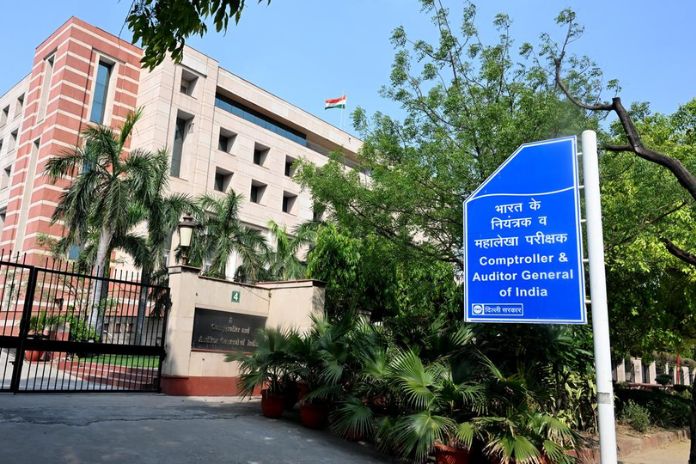
The Comptroller and Auditor General (CAG) of India has uncovered serious financial lapses in the functioning of the Central Public Works Department (CPWD), revealing that the agency systematically inflated project cost estimates and drew ₹513 crore in excess funds.
In its latest audit report on Economic and Service Ministries, tabled in Parliament on August 13, 2026, the CAG highlighted fundamental flaws in how CPWD determines base rates for construction and maintenance works under its Delhi Schedule of Rates (DSR) 2021.
Unrealistic Rate-Setting Methodology
The CAG found that CPWD adopted an unrealistic methodology for collecting base rates while revising the DSR in 2021. Critically, the department did not conduct a proper market survey before updating the schedule, which serves as the benchmark for estimating project costs and inviting tenders.
This lack of due diligence led to inflated estimates that bore little resemblance to actual market rates, resulting in avoidable financial burden on the exchequer.
93% Projects Awarded Below Estimates
The audit data presents a stark picture of systematic overestimation:
- Period reviewed: January 2022 to January 2023
- Total works examined: 5,011
- Works awarded below estimate: 4,666 (93%)
- Excess funds drawn: ₹513 crore
The CAG report stated: “The methodology adopted by CPWD for collection of base rates was not realistic. During the period from January 2022 to January 2023, out of 5,011 works, 4,666 or 93%, were awarded at tendered costs less than the estimated cost prepared based on DSR 2021.”
This means that in the overwhelming majority of cases, contractors bid significantly lower than what CPWD had originally estimated—clear evidence that the department’s cost projections were inflated from the outset.
Faulty Profit and Overhead Calculations
Beyond base rate issues, the CAG also flagged a defective process for computing contractor profit and overhead charges. This additional flaw further contributed to bloated project estimates, compounding the financial impact on government spending.
Rising Budget Estimates Raise Concerns
The audit findings come against a backdrop of rapidly expanding CPWD budget allocations:
- 2020–21: ₹2,027.33 crore
- 2021–22: ₹3,100.57 crore
- 2022–23: ₹4,314.08 crore
The department’s Budget Estimates more than doubled in just three years, underscoring the scale of financial planning concerns now exposed by the CAG.
Implications for Fiscal Accountability
The CAG’s findings point to weak internal controls and inadequate oversight in CPWD’s rate-setting and estimation framework. When a government agency consistently overestimates costs, it not only ties up public funds unnecessarily but also undermines transparency and accountability in infrastructure spending.
The report raises critical questions about:
- Due diligence in revising rate schedules
- Market validation of estimated costs
- Internal audit mechanisms within CPWD
- Fiscal prudence in budget planning for central works
What Happens Next?
As a constitutional auditor, the CAG’s reports are tabled in Parliament and referred to the Public Accounts Committee (PAC) for detailed examination. The PAC typically summons concerned officials, seeks explanations, and recommends corrective actions or recoveries where financial irregularities are established.
Given the magnitude of the lapses—₹513 crore in excess draws and systematic overestimation across 93% of projects—the findings are likely to trigger intense parliamentary scrutiny and demands for reform in CPWD’s estimation processes.
Bottom Line
The CAG audit exposes a troubling pattern of cost inflation within one of the Union Government’s key infrastructure agencies. With public money at stake and trust in fiscal management under scrutiny, the CPWD will need to undertake comprehensive reforms in its rate-setting methodology, strengthen market surveys, and ensure realistic project estimates going forward.
For taxpayers and policymakers alike, the report serves as a stark reminder: accurate cost estimation is not just a technical requirement—it’s a cornerstone of responsible governa