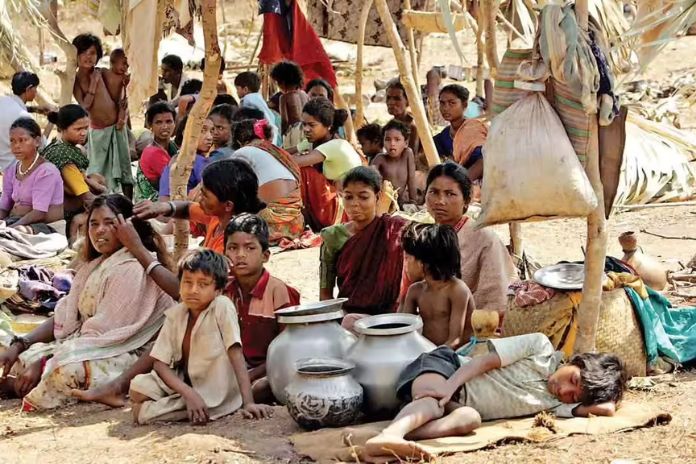
Extreme poverty in India has fallen sharply to 2.6% in 2023, according to the World Bank’s October 2026 Poverty and Equity Brief. This is a major decline from 27.1% in 2011, when more than one in four Indians lived below the extreme-poverty threshold.
What the data shows
The World Bank measures extreme poverty using an international threshold of $3.00 per person per day, adjusted for 2021 purchasing-power parity. In 2023, 2.6% of India’s population lived below this line, compared with 27.1% in 2011.
That means extreme poverty in India fell by nearly 90% over 12 years. The World Bank estimates that around 75.2 million people were still below the extreme-poverty line in 2023, showing that although the rate is low, the absolute number remains significant.
A wider poverty decline
India’s progress is not limited to extreme poverty. The share of people living below the World Bank’s lower-middle-income poverty line of $4.20 per person per day fell from 57.7% in 2011 to 16.1% in 2023.
| Poverty measure | 2011 | 2023 |
|---|---|---|
| Extreme poverty, $3.00/day | 27.1% | 2.6% |
| Lower-middle-income poverty, $4.20/day | 57.7% | 16.1% |
Using the higher $4.20 threshold, the World Bank estimates that about 496 million peoplemoved out of poverty between 2011 and 2023.
Why the decline matters
The World Bank describes India’s progress as one of the fastest poverty reductions in the world. The improvement reflects gains in household consumption, access to basic services, and broader economic development over the period.
For families, moving above the extreme-poverty line can mean greater ability to afford food, housing, healthcare, education, and other daily essentials. The decline also suggests that India’s growth has reached many households that were previously among the poorest.
Challenges that remain
Despite the encouraging headline numbers, poverty has not disappeared. Nearly 16.1% of Indians still lived below the $4.20-a-day lower-middle-income poverty line in 2023, while about 75 million people remained below the extreme-poverty threshold.
The report also highlights that poverty reduction must continue alongside efforts to reduce inequality and improve access to quality jobs, education, healthcare, and social protection. A falling poverty rate is important, but sustained progress will depend on whether vulnerable households can maintain and improve their living standards.
The bigger picture
The fall in extreme poverty in India from 27.1% to 2.6% is a major development milestone. It shows that large-scale poverty reduction is possible over a relatively short period, but it also reminds policymakers that millions of people still need support to escape deprivation permanently.
India’s next challenge is to convert this progress into durable improvements in income security, public services, and opportunity—so that families do not merely rise above a poverty line, but build stable and better lives.