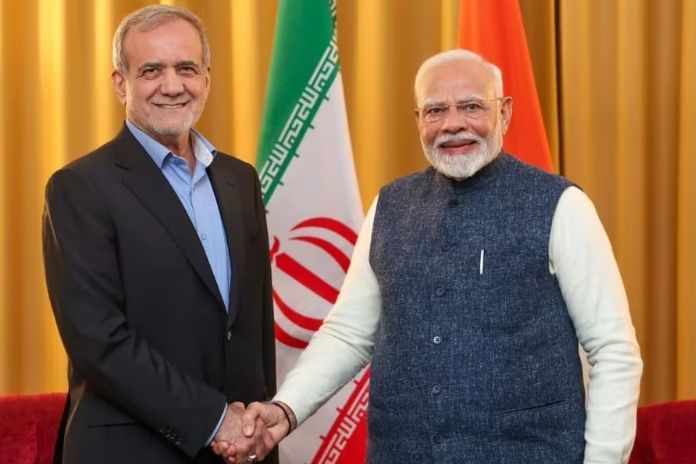
Prime Minister Narendra Modi met Iranian President Masoud Pezeshkian on the sidelines of the Shanghai Cooperation Organisation (SCO) summit in Bishkek, Kyrgyzstan, on Monday, August 31, 2026. The bilateral talks focused on calming tensions in West Asia, protecting commercial shipping routes and reviewing India–Iran cooperation.
Regional peace at the centre
Modi underlined the need for “continued efforts to ensure lasting peace and stability in the region,” urging all parties to pursue dialogue and restraint. The message came as conflicts in West Asia threaten to spill over into wider confrontations, with risks to civilians and infrastructure.
The Indian side stressed that de-escalation is essential not only for regional security but also for global trade and energy flows that pass through the Middle East.
Safe sea lanes and seafarer protection
A major theme of the meeting was safeguarding freedom of navigation and commerce. Modi said civilians and civilian infrastructure, including merchant ships and seafarers, “must not be harmed under any circumstances,” a clear reference to recent attacks on commercial vessels in the Strait of Hormuz.
India has repeatedly called for unhindered passage through critical chokepoints such as Hormuz, through which a large share of its oil and gas imports travel. Disruptions there can quickly translate into higher fuel prices and supply uncertainty for Indian consumers and industries.
Energy security and trade corridors
The leaders discussed how instability in West Asia could affect energy supplies and shipping schedules. With India dependent on Gulf crude and LNG, any prolonged closure or threat to the Hormuz Strait would have immediate economic consequences.
They also reviewed the status of India’s strategic investments in Iran, including the Chabahar Port, which New Delhi sees as a key gateway for trade with Afghanistan and Central Asia. Ensuring the safety and smooth operation of Chabahar is vital for India’s alternative connectivity plans.
Indian community and bilateral ties
Safety and welfare of the Indian community in Iran, as well as Indian seafarers working on vessels in the region, were high on the agenda. Both sides agreed to maintain close contact to address any emerging challenges.
The meeting also served as a chance to take stock of overall India–Iran relations. Officials noted the importance of expanding cooperation in areas of mutual interest, including trade, connectivity and people-to-people links, while navigating a complex international environment marked by sanctions and geopolitical rivalries.
SCO backdrop: A crowded diplomatic day
The Bishkek summit, running from August 31 to September 1, 2026, brings together leaders from India, China, Russia, Pakistan, Iran, Belarus and Central Asian states. The agenda covers counter-terrorism, energy security, transport corridors, digital cooperation and regional stability.
For Modi, the Iran meeting was part of a busy day of bilateral engagements at the summit, reflecting India’s effort to balance relations with multiple partners while pushing its core interests: secure energy supplies, safe maritime routes and stable neighbourhoods.
Why this matters for India
- Oil and gas: Any sustained disruption in Hormuz can push up crude prices and freight costs, feeding into inflation and the current account.
- Seafarers: Thousands of Indian nationals work on merchant ships in the Gulf and nearby waters; their safety is a top priority for New Delhi.
- Chabahar and connectivity: A stable eastern Iran is crucial for India’s plans to use Chabahar as a trade and transit hub, reducing dependence on Pakistan-linked routes.
The Modi–Pezeshkian meeting signals India’s preference for diplomatic solutions, protection of civilian shipping and continuity of energy flows, even as it manages complex ties with Iran, Gulf Arab states, Russia and the West.