Prime Minister Narendra Modi and US President Donald Trump held a telephone conversation on Wednesday to review India–US relations, with New Delhi raising concerns over a new American law that could impose steep tariffs on countries buying Russian oil.
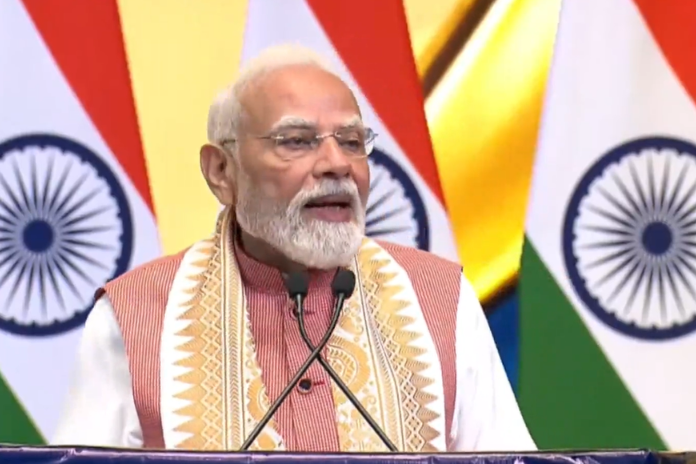
In a post on social media, Modi described the discussion as “productive”. He said the two leaders reviewed cooperation in trade, defence, energy and critical technologies, and agreed to maintain close engagement to take the India–US Comprehensive Global Strategic Partnership forward.
The call comes days after President Trump signed the Lindsey O. Graham Sanctioning Russia and Iran Act of 2026 into law. The legislation authorises the US president to impose targeted tariffs of up to 100% on imports from countries that are among the top five buyers of Russian crude oil or natural gas and continue new purchases after the law takes effect.
India, which has significantly increased imports of discounted Russian crude since 2022, falls in this category by volume. New Delhi has warned Washington that using the law to penalise Indian energy purchases could hurt bilateral ties and disrupt global energy markets, while maintaining that its oil-import policy is based on diversified sourcing and complies with international rules.
During the call, the two sides also discussed broader regional and international issues, including efforts to promote global peace and security, according to Indian officials. Both leaders reaffirmed their commitment to the strategic partnership and agreed to remain in close touch as trade negotiations continue.
The conversation took place as Union Commerce Minister Piyush Goyal was beginning a visit to the United States for talks on a proposed India–US bilateral trade agreement. Reports suggest that while the Russia-related tariff risk was a key backdrop, the leaders focused on keeping cooperation on track in defence, technology and energy even as some trade frictions persist.
For now, the law does not automatically slap a 100% duty on Indian goods. It gives the US administration discretion to decide which countries qualify for penalties, what tariff rates to apply, and whether to issue waivers. That leaves room for diplomacy, but also creates uncertainty for Indian exporters and energy planners.
India’s message, as reflected in the readout and recent statements, is clear: it wants to deepen ties with Washington on trade, defence and technology, but also needs space to protect its energy security and economic interests while navigating the complex geopolitics around Russia.