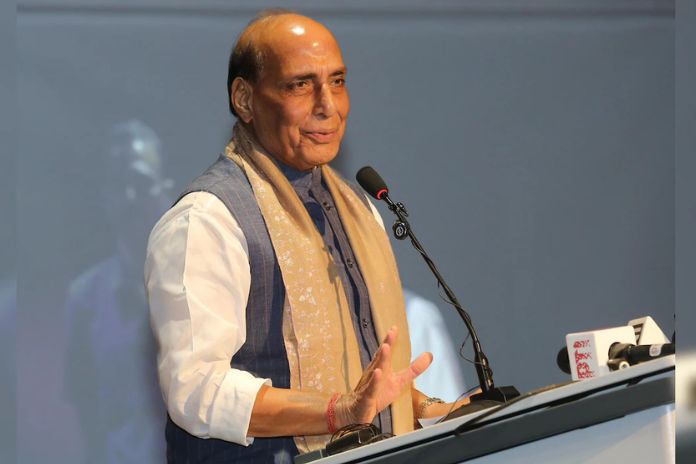
Defence Minister Rajnath Singh has approved the transfer of technologies developed by the Defence Research and Development Organisation (DRDO) for India’s conventional missile systems to eligible domestic defence companies.
The decision is aimed at increasing private-sector participation in defence manufacturing, expanding production capacity and reducing India’s dependence on imported military equipment.
The Ministry of Defence said the move would support the country’s objective of building a stronger and more self-reliant defence industry under the Aatmanirbhar Bharat initiative.
What the decision covers
The approval applies to conventional missile systems developed by DRDO. These may include missiles used for air defence, air-to-air combat, anti-armour operations, battlefield strikes and anti-ship missions.
Potentially covered systems include:
- Akash and Akash-NG surface-to-air missiles.
- Astra air-to-air missiles.
- Very Short-Range Air Defence System.
- Nag and other anti-tank guided missile systems.
- Rudram anti-radiation missiles.
- Anti-ship and land-attack missile programmes.
- Pralay, a conventional quasi-ballistic missile.
The final transfer of each technology will depend on eligibility conditions, technical assessments, certifications and other government regulations.
Strategic missile programmes, including the Agni and K-series systems, are not included in the decision. Projects involving foreign partners, such as BrahMos and the Medium Range Surface-to-Air Missile programme, will continue under their existing arrangements.
Role of DRDO and industry
Under the new framework, Indian companies will be able to use DRDO-developed technologies to manufacture approved missile systems within the country. DRDO will continue to support design certification, technical validation and quality assurance.
The involvement of private companies could complement the role of public-sector manufacturers such as Bharat Dynamics Limited, which has been associated with the production of several Indian missile systems.
Greater participation from private firms may help introduce additional investment, modern manufacturing practices and competition in the defence sector. It could also encourage companies to develop specialised capabilities in propulsion, guidance systems, warheads, electronics and missile integration.
Boost to defence self-reliance
India has been seeking to increase domestic production of military equipment and reduce its dependence on foreign suppliers. Missile technology transfer is an important part of this effort because missiles require advanced capabilities across several areas, including materials, electronics, propulsion and precision guidance.
Increasing local manufacturing could help the armed forces receive weapons more quickly and improve the availability of spare parts and maintenance support. It may also strengthen India’s ability to replenish missile stocks during a prolonged security crisis.
The decision could create new opportunities for defence exports if Indian companies are able to manufacture reliable systems at competitive prices and secure the necessary government approvals.
Challenges ahead
Technology transfer alone will not guarantee immediate increases in production. Companies will need to meet strict safety, security and quality standards before receiving approval to manufacture the systems.
The success of the initiative will also depend on the speed of agreements between DRDO, the government and private companies. Consistent quality control, timely procurement orders and coordination between developers and manufacturers will be essential.
If implemented effectively, the policy could help transform indigenous missile designs into large-scale production programmes and deepen India’s defence-industrial capabilities.