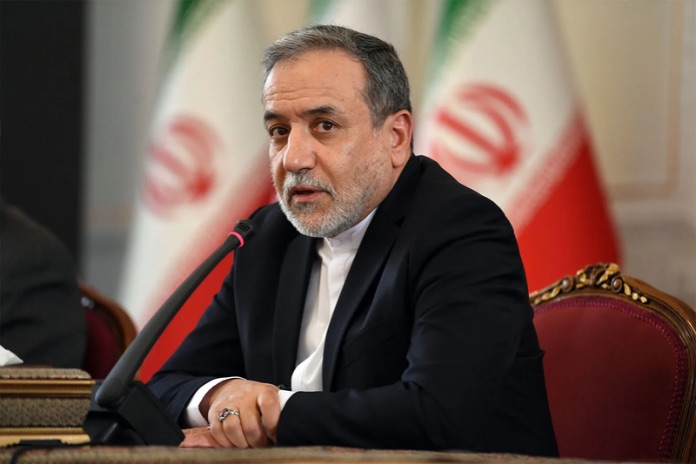
Iranian Foreign Minister Abbas Araghchi has said that China and Russia oppose any change to Iran’s nuclear doctrine. His remarks come as debate grows inside Iran over whether the country should reconsider its long-standing position against nuclear weapons.
Araghchi made the comments in an interview with Iran’s state-run Iran Daily newspaper. He said the issue was “broad” and “serious,” with both supporters and opponents within the country.
Iran’s current position
The foreign minister stressed that Iran’s nuclear doctrine has not changed so far. “What matters is that, up to this point, our doctrine has not changed, and our official positions remain the same as before,” Araghchi said.
Iran’s existing doctrine is linked to a religious ruling by the late Supreme Leader Ayatollah Ali Khamenei that prohibits nuclear weapons. The policy has been a central part of Tehran’s public stance for years.
Why China and Russia matter
Araghchi said that both China and Russia are against a revision of Iran’s nuclear doctrine. Iran has strategic cooperation agreements with both countries, making their views especially important for Tehran’s foreign policy.
Their opposition suggests that Iran’s closest partners do not want to see a policy shift that could increase regional tensions or complicate diplomatic relations. China and Russia have long supported diplomatic engagement around Iran’s nuclear programme.
Domestic pressure for change
The debate over Iran’s nuclear doctrine has intensified after military strikes on Iranian nuclear facilities by the United States and Israel. Some hardline voices in Iran argue that the country needs a stronger deterrent, while others support maintaining the existing policy.
Araghchi acknowledged that there are people who believe Iran should keep its doctrine in its current form, as well as those who call for a change. However, he made clear that no official change has taken place.
Enriched uranium remains a red line
In the same interview, Araghchi repeated that Iran will not allow its stockpile of enriched uranium to leave the country. He described this as a “red line” in any negotiations.
The statement highlights Tehran’s continuing sensitivity over its nuclear materials, even as it says its broader doctrine has not changed.
What happens next
For now, Iran’s official nuclear doctrine remains unchanged. Araghchi’s comments indicate that China and Russia are likely to resist any move by Tehran to revise its position on nuclear weapons.
The issue is expected to remain a major topic in Iranian politics and international diplomacy, particularly as pressure grows from hardliners seeking a more assertive nuclear policy.