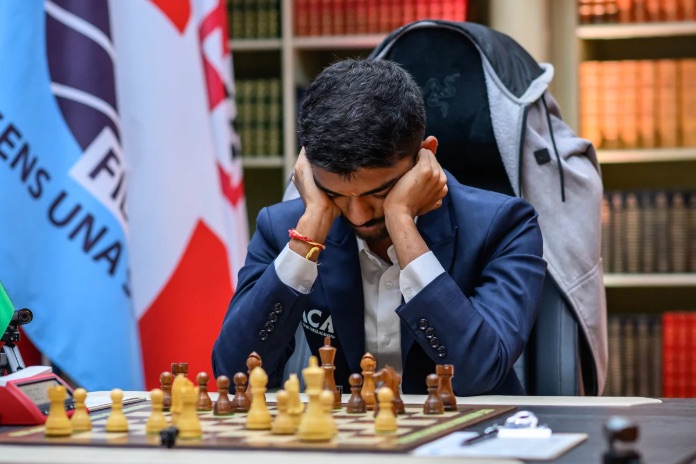
Defending champion D. Gukesh began his World Chess Championship title defence with a composed 38-move draw against Uzbek grandmaster Javokhir Sindarov in Game 1 in Geneva. The Indian star said he felt in control throughout, even while managing a shrinking clock.
A Tense Opening Battle
Gukesh chose the Berlin Defence against Sindarov’s 1.e4, a solid and resilient way for Black to neutralise White’s opening advantage. The game quickly became tense as Sindarov sought active play and tried to build pressure around Gukesh’s position.
Sindarov later explained that he was pushing for chances partly because of the clock. However, he also acknowledged that the position remained very close to equal, which limited his opportunities to create a decisive advantage.
Gukesh’s Calm Assessment
After the game, Gukesh said, “I thought I was always under control,” adding that he did not believe he was in a position where he needed to worry. His comment highlighted the difference between facing time pressure and facing a genuinely dangerous position.
The world champion also said that, once he entered time trouble, he had already planned his next moves. That preparation helped him make practical decisions quickly and avoid errors during the most demanding part of the game.
Sindarov’s Initiative Falls Short
Sindarov sacrificed a pawn at one stage to gain initiative and create attacking chances against Gukesh’s king. The plan added tension to the game, but Gukesh’s accurate defence prevented the position from becoming critical.
Eventually, the players reached a repetition and agreed to a draw after 38 moves. The result left the match level at 0.5–0.5, with both competitors taking an early point from the opening game.
Why the Draw Matters
A draw in the first game is a stable start for Gukesh, who is defending the world title. Holding Black against an ambitious challenger is valuable, particularly when the opponent invests material and energy in search of an advantage.
For Sindarov, the game showed that he is prepared to take risks and test the champion early. Yet Gukesh’s ability to remain composed under clock pressure demonstrated why he remains a difficult opponent in long championship matches.
What Comes Next
The match continues with Game 2, where both players will look to gain an early psychological edge. Gukesh will aim to convert his defensive assurance into chances with White, while Sindarov will try to create more concrete pressure before the position simplifies.
Gukesh’s message after Game 1 was clear: the clock was ticking, but he never felt that the position had slipped beyond his control.