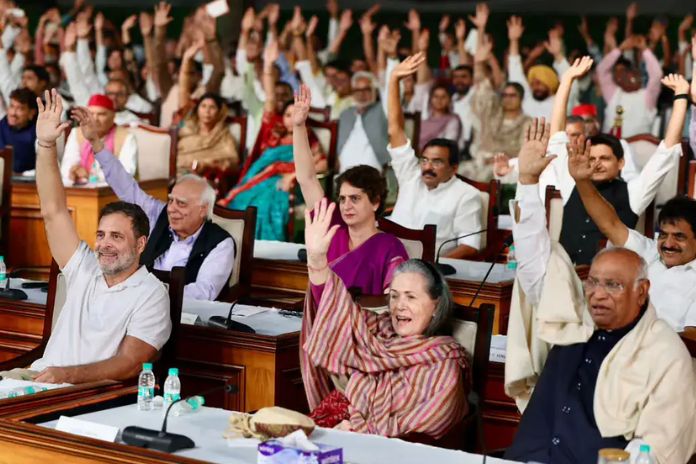
India’s opposition INDIA bloc held a symbolic “People’s Impeachment” of Chief Election Commissioner Gyanesh Kumar on October 31, 2026, at Congress president Mallikarjun Kharge’s residence in New Delhi. The event was originally called a “Mock Parliament,” but organisers later renamed it to stress that it was a public political protest rather than a formal parliamentary proceeding.
What the opposition did
Leaders and MPs from more than 20 INDIA bloc parties gathered for the programme, which was presided over by former Lok Sabha Speaker Meira Kumar. Kharge moved a six-point resolution accusing the Chief Election Commissioner of actions that the opposition says damaged the fairness of India’s electoral process.
The resolution was passed unanimously. It demanded the CEC’s immediate removal and called for him to be tried in court under India’s constitutional and legal framework.
The six allegations
The INDIA bloc’s resolution made six main allegations against Gyanesh Kumar:
- Conspiring to manipulate national and state elections.
- Deleting 13.2 crore voters from electoral rolls during the Special Intensive Revision, or SIR.
- Changing Form 6, used for voter registration, without Parliament’s approval.
- Centralising control of electoral rolls through the ECINET system.
- Excluding the other two Election Commissioners from decision-making.
- Acting at the behest of Prime Minister Narendra Modi and Union Home Minister Amit Shah.
These are allegations made by the opposition bloc; they have not been established through a court ruling or a formal constitutional impeachment process.
Why the protest was held
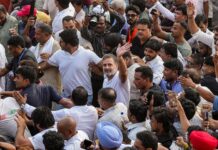
The opposition said it had been unable to secure a discussion in Parliament for two consecutive sessions. It argued that the protest was necessary to take its concerns over alleged voter-list deletions and electoral irregularities directly to the public.
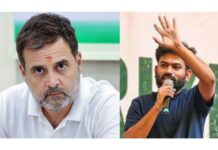
Rahul Gandhi described the public impeachment as a “political weapon” against those accused of undermining citizens’ votes. The bloc also linked the event to its wider “vote chori” campaign and its planned Ramlila Maidan rally on November 1.
BJP’s reaction
The BJP strongly criticised the event, calling it a “mockery” of Parliament and democratic institutions. Senior leaders, including Union Home Minister Amit Shah, dismissed the exercise as political theatre and used it to attack Rahul Gandhi’s leadership ambitions.
What it means legally
The “public impeachment” was symbolic and had no direct legal effect. Removing a Chief Election Commissioner in reality requires a formal constitutional process and sufficient support in Parliament, which the opposition does not currently have.
The event nonetheless marks a sharp escalation in the political dispute over India’s electoral system, placing the Election Commission at the centre of a growing confrontation between the INDIA bloc and the BJP-led government.