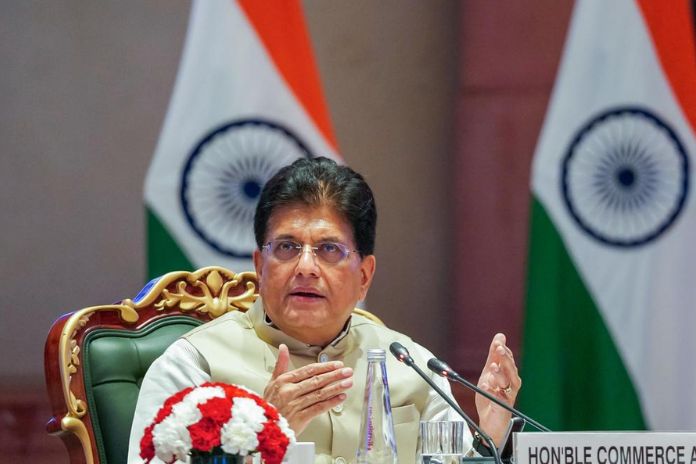
India and Canada are set to begin the fifth round of negotiations for their proposed Comprehensive Economic Partnership Agreement (CEPA) on October 5, 2026, with both sides working to finalise the deal by December. Commerce and Industry Minister Piyush Goyal said the next 90 days will be a “defining period” for bilateral ties as talks move into a faster gear.
The announcement came after the fourth round of CEPA talks concluded in New Delhi on September 18 following five days of discussions. Goyal told reporters that the two countries have resolved to fast‑track negotiations, and India’s team is now scheduled to travel to Canada for the fifth round starting October 5.
Why the push now?
New Delhi and Ottawa want stronger economic links after a phase of strained relations, and both see CEPA as a route to deeper trade and investment. The two governments have set an ambitious target of lifting bilateral trade to about $50 billion by 2030, from much lower levels today. Some Canadian statements also point to an even higher aspiration of two‑way trade around $70 billion by 2030.
What is on the table?
CEPA talks cover a wide range of issues that shape how businesses from both countries access each other’s markets. Key areas include:
- Trade in goods and market access: Reducing or removing tariffs and improving entry for products such as pharmaceuticals, textiles, engineering goods, chemicals, electronics, and agricultural items.
- Services and mobility: Expanding opportunities in IT, telecom, professional and business services, along with rules for the movement of professionals and business persons.
- Standards and regulations: Working on rules of origin, sanitary and phytosanitary (SPS) measures, and technical barriers to trade (TBT) to ease certification, testing, and food‑safety requirements.
- Broader cooperation: Sectors such as aerospace, AI, clean energy, and critical minerals are part of the wider economic engagement being discussed.
Commerce Secretary Rajesh Agarwal has said that two chapters of the agreement have already been finalised, while work continues on the remaining parts.
What India trades with Canada now
India’s major exports to Canada include pharmaceuticals, iron and steel, seafood, cotton garments, electronic goods, and chemicals. From Canada, India mainly imports pulses, pearls and semi‑precious stones, coal, fertilisers, paper, and crude petroleum. In services, India’s exports are led by telecom, computer and information services, and other business services.
Next steps
With the fifth round fixed for October 5, the focus is on closing difficult chapters on market access, rules, and standards so that leaders can announce a deal before the end of 2026. If successful, CEPA could give Indian exporters better access to Canada’s market and attract more investment in priority sectors, while also supporting Canada’s goal of diversifying its trade beyond the United States.
For now, the message from New Delhi is clear: the pace has picked up, and the next three months could shape the future of India–Canada economic ties.