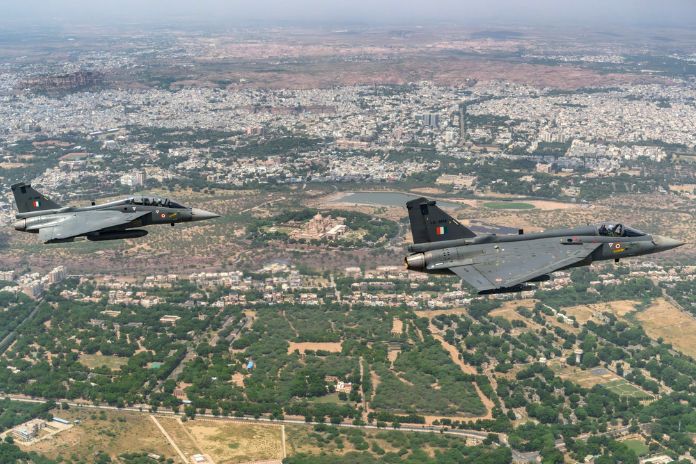
In a first-of-its-kind moment, the chiefs of the Indian and Japanese air forces flew together in India’s homegrown Tejas fighter during Exercise Veer Guardian 2026 at Air Force Station Jodhpur. The sortie on September 20, 2026, saw IAF Chief Air Chief Marshal A.P. Singh lead the formation in a single-seat Tejas as “Eagle One”, while JASDF Chief General Takehiro Morita flew in the twin‑seater trainer version with an IAF pilot.
After take‑off, the two jets flew a coordinated formation over the airfield, performed a peel‑off manoeuvre, and landed safely, giving Morita direct experience of the Tejas cockpit and systems. Singh later said the Japanese chief’s flight reflected trust in India’s indigenous aerospace capability and could open doors to deeper cooperation, including possible fighter‑training exchanges.
First Japanese fighters on Indian soil
Beyond the Tejas flight, Veer Guardian 2026 is notable because Japanese F‑2A fighter jets operated from Indian soil for the first time. Japan deployed three F‑2A fighters from its 8th Air Wing at Tsuiki Air Base, along with around 110 personnel, to join the 14‑day drill that began on September 9 and runs until September 22.
India fielded a strong mix of frontline aircraft: the indigenous Tejas Light Combat Aircraft (LCA), Su‑30MKI multirole fighters, and Rafale jets. During the exercise, air warriors from both sides undertook advanced operational missions, simulated combat scenarios, and air‑strike drills designed to sharpen tactical skills and improve interoperability.
Why Veer Guardian 2026 matters for Indo‑Pacific ties
Exercise Veer Guardian is the second bilateral air combat drill between the Indian Air Force and the Japan Air Self‑Defense Force, following the first edition held in Japan in 2023. Holding the 2026 edition at Jodhpur, with Japanese fighters flying from an Indian base, marks a clear step up from symbolic engagement to more operational, frontline‑level cooperation.
Defence leaders have described Tokyo’s decision to send fighter aircraft to India as a significant milestone in the growing India‑Japan defence partnership. Both air forces say the drill is aimed at improving tactical proficiency, deepening mutual understanding, and reinforcing the “enduring bonds of friendship” between the two countries.
In the wider strategic picture, the exercise underscores converging interests in a free and open Indo‑Pacific. As regional security dynamics evolve, regular high‑end air drills like Veer Guardian help India and Japan build the habits of joint planning, shared procedures, and real‑world coordination that can be crucial during crises.
Messages from the two chiefs
General Morita called his Tejas flight “memorable” and praised the aircraft as a symbol of India’s technological innovation and the success of the “Make in India” initiative. He highlighted the sortie as a sign of the trust between the two air forces and the potential for closer collaboration in future.
Air Chief Marshal Singh framed the event as a historic step under the India‑Japan Special Strategic and Global Partnership. He noted that gestures such as the exchange of patches during the exercise reflected the depth of the relationship and the shared commitment to regional stability.
What happens next
With Veer Guardian 2026 running until September 22, both sides are using the window to push the envelope in air combat training and professional interaction. If the momentum continues, future editions could see even more complex scenarios, larger contingents, and possibly expanded participation across domains, further cementing India and Japan as key air‑power partners in the Indo‑Pacific.