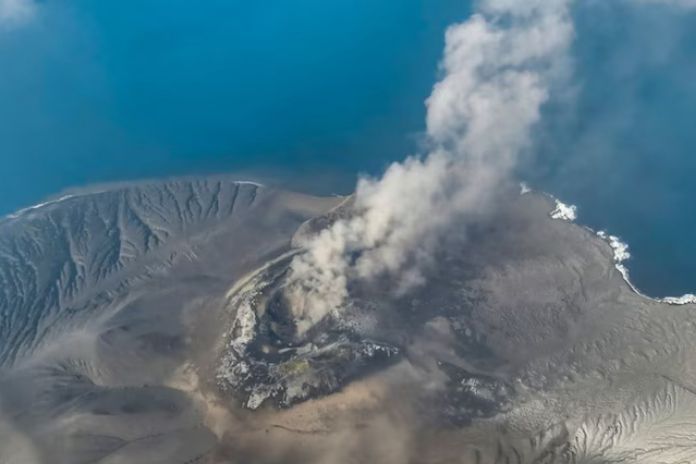
Indonesia’s Anak Krakatau volcano erupted over the weekend, sending thick ash clouds over Jakarta and parts of Lampung and forcing the closure of eight airports. By early Tuesday, authorities had reopened Jakarta’s main airport and four others, allowing flights to resume after nearly 3,000 were disrupted and more than 340,000 passengers were left stranded.
What happened
Late on Friday, September 4, 2026, Anak Krakatau, located in the Sunda Strait between Java and Sumatra, began a series of strong eruptions. The volcano produced lava fountains, loud booms, and a tall ash column that drifted toward western Indonesia, including the capital region.
By Sunday, volcanic ash had reached altitudes of up to about 15,000 metres on the Sumatra side, making it unsafe for aircraft to operate. Indonesia’s transport authorities shut down Soekarno-Hatta International Airport in Jakarta and seven other airports, canceling and delaying hundreds of flights.
Scale of disruption
- Nearly 3,000 flights were delayed or canceled across the eight affected airports.
- More than 340,000 travellers were stranded during the two-day shutdown.
- At the peak, around 170,000 passengers were stuck at Jakarta’s main airport alone.
Airlines faced a massive backlog as they worked to rebook passengers and reposition aircraft once operations restarted.
Airports reopen as ash clears
On Tuesday, September 8, Indonesia’s Transport Ministry announced that five airports had reopened after crews cleared volcanic ash from runways, taxiways, and other critical infrastructure.
The reopened airports include:
- Soekarno-Hatta International Airport (WIII), Jakarta’s main international hub
- Halim Perdanakusuma Airport (WIHH), Jakarta
- Husein Sastranegara Airport (WICC), Bandung
- Budiarto Airport (WIRR), Tangerang
- Pondok Cabe Airport, Banten
Operations at these airports resumed just after midnight local time, with some fully back to normal by late morning.
Three airports remained closed for further assessment as of Tuesday morning:
- Radin Inten II Airport, Lampung
- Muhammad Taufiq Kiemas Airport, Lampung
- Salakanagara Tanjung Lesung Airport, Pandeglang
These were expected to stay shut until at least 10 a.m. local time while authorities monitored ash conditions.
Impact on daily life
In Jakarta and surrounding areas, the ashfall prompted some schools to shift to online classes as a precaution. Many offices, however, remained open, with workers commuting through light ash-covered streets.
Transport and aviation authorities have urged travellers to check flight statuses directly with airlines and airport websites, as schedules are still being normalised and some routes may face residual delays.
Why Anak Krakatau matters
Anak Krakatau is the cone that grew inside the caldera of the historic Krakatau volcano, which famously erupted in 1883 with global consequences. The modern cone has been active in recent years, with a deadly 2018 eruption triggering a tsunami that killed hundreds.
Indonesia sits on the Pacific “Ring of Fire” and has more than 120 active volcanoes, making it one of the most volcanically active countries in the world. Disruptions like the current Anak Krakatau eruption are a recurring risk for aviation, tourism, and local communities.