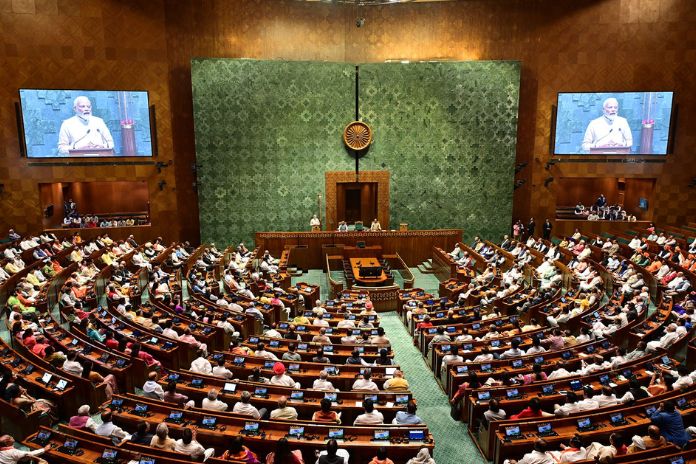
The Monsoon Session of Parliament ended on August 13 after weeks of protests, political confrontation and repeated disruptions. The Centre had planned to push forward with an ambitious legislative agenda, but proceedings were dominated by student protests, police action and Opposition demands for discussions on sensitive political issues.
The Lok Sabha functioned for only 19% of its scheduled time, while the Rajya Sabha recorded productivity of around 39%. The figures highlighted the limited amount of time available for detailed debate, legislative scrutiny and discussions on issues of public concern.
Student Protests Become Major Flashpoint
Student protests emerged as one of the central issues of the session. Demonstrators marched towards Parliament to raise concerns linked to the education system and alleged irregularities surrounding competitive examinations.
The police crackdown on the protesters intensified the political dispute. Opposition parties demanded an explanation from the government and questioned the use of force against students. They also sought accountability from the Union Home Ministry over the action taken during the demonstration.
The issue repeatedly disrupted proceedings in both Houses, preventing Parliament from focusing on several items listed on the government’s agenda.
Opposition Raises Ram Temple Donation Issue
Opposition parties also demanded a discussion on alleged irregularities in donations collected for the Ram Temple in Ayodhya. They sought greater transparency regarding the management, counting and security of the donations.
The government rejected the Opposition’s allegations and accused it of intentionally obstructing Parliament. The disagreement over whether the issue should be discussed became another source of repeated adjournments.
For the Opposition, the matter required parliamentary scrutiny. For the government, the protests were an attempt to derail legislative business and avoid constructive debate.
Bills Passed With Limited Debate
Despite the disruptions, Parliament passed 12 bills during the session. However, reports indicated that only two of these bills received substantive debate, while the others were passed without detailed discussion.
This raised concerns among parliamentary experts and Opposition leaders about the quality of legislative scrutiny. Bills passed without adequate debate give MPs less opportunity to examine their provisions, suggest changes and assess their potential impact on citizens.
The government, however, maintained that it remained committed to completing legislative business despite the repeated disruptions.
Government and Opposition Blame Each Other
The Centre blamed the Congress and other Opposition parties for preventing Parliament from functioning normally. Union Parliamentary Affairs Minister Kiren Rijiju said disruptions were responsible for the low productivity figures.
The Opposition countered that the government had refused to allow debates on important public issues. Congress leaders alleged that the Centre was avoiding accountability on the student protests, examination controversies and the Ram Temple donation issue.
Both sides ended the session with sharply different interpretations of what had happened. The government pointed to the bills passed, while the Opposition focused on the loss of debate and accountability.
A Session Defined by Lost Debate
The Monsoon Session formally advanced some of the Centre’s legislative plans, but it failed to provide sustained parliamentary discussion on several contentious issues. With Lok Sabha productivity at just 19% and Rajya Sabha productivity at about 39%, the session became one of the most disruptive in recent years.
The outcome underlined a continuing challenge for Indian parliamentary democracy: political parties may use protests to highlight public concerns, but prolonged disruptions can also reduce the time available for lawmaking and scrutiny.
For the government and the Opposition, the next challenge will be to prevent similar deadlock in the upcoming session and ensure that important legislation is debated before it is passed.