The Supreme Court on Wednesday declined an urgent plea seeking action over alleged police excesses during a student protest linked to the CJP Parliament march in Delhi. The matter was mentioned before Chief Justice of India Surya Kant, who reportedly refused to treat the video material as a basis for immediate intervention.
When the lawyer said there was video evidence of police violence, the Chief Justice reportedly said, “Don’t waste our time,” and added that the court was not interested in watching videos at that stage. The bench also declined to initiate suo motu proceedings on the issue.
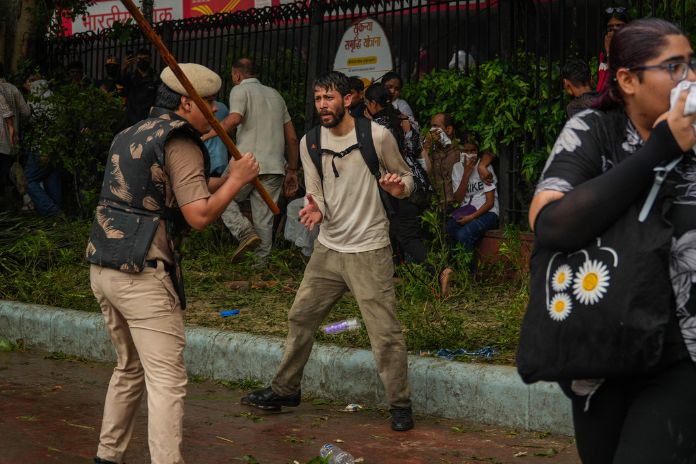
The plea was tied to the July 20 crackdown on protesters marching under the CJP banner toward Parliament. Reports said the demonstration led to clashes, detentions, tear gas use, and injuries to both protesters and police personnel.
The protest centered on student demands linked to examination irregularities and calls for action against the Union Education Minister. After the police response, the issue triggered a political reaction, with opposition leaders raising questions over the use of force.
What Happened
The court was asked to urgently hear the matter based on claims that police had used excessive force against student protesters. According to the reports, the judge at the mention stage was not inclined to examine the footage or start a fresh proceeding immediately.
The police action took place during a march that had already drawn heavy security around Parliament. News reports said the confrontation escalated when protesters tried to push forward through barricades, prompting crowd-control measures by police.
Why It Matters
The court’s refusal means the matter will not get immediate judicial attention at this stage. That leaves the legal challenge to follow the normal process instead of moving forward as an emergency matter.
The episode also shows how quickly a protest can move from street confrontation to a larger legal and political issue. With allegations of force, injuries, and counterclaims from police, the case is likely to remain part of the wider debate around protest policing and student activism.