The Middle East has once again become the centre of global geopolitical tensions as confrontation between Iran, Israel and the United States intensifies. What began as a shadow conflict involving cyberattacks, covert operations and proxy warfare has now escalated into a more direct and visible confrontation. This shift is not only threatening regional stability but also raising concerns about global energy markets and critical maritime trade routes.
Even countries far removed from the battlefield are already experiencing the economic impact of this crisis. India, for instance, which imports nearly 85–88% of its crude oil, is facing rising energy costs due to supply uncertainties and market volatility. Reports of tightening LPG supply and increasing insurance premiums on shipments have added pressure on households, industries and commercial sectors. Similarly, countries like Bangladesh and Pakistan are facing energy stress, while oil-exporting nations such as Russia may benefit from elevated global prices.
Historical Roots of the Conflict
The roots of this conflict lie in decades of ideological rivalry and geopolitical tension. Prior to 1979, Iran and the United States shared close diplomatic ties, but the Iranian Revolution fundamentally transformed Iran’s political system and foreign policy orientation. The subsequent Iran Hostage Crisis, during which 52 Americans were held for 444 days, marked a decisive breakdown in relations. In the years that followed, the United States imposed sanctions on Iran, while Iran adopted a strongly anti-US and anti-Israel stance. Tensions further escalated after the killing of Qasem Soleimani in a US drone strike in 2020, an event that drew global attention and raised serious questions about international law and state sovereignty.
The Iran–Israel rivalry has also developed largely through indirect means. Rather than engaging in sustained direct conflict, Iran has supported groups such as Hezbollah in Lebanon and Hamas in Gaza, enabling it to exert pressure on Israel while maintaining a degree of strategic distance. These proxy engagements have long defined the nature of the conflict, but recent developments suggest a shift away from this model
From Shadow War to Direct Confrontation
In recent months, Israel has carried out multiple air and missile strikes on targets within Iran as part of a broader campaign aimed at weakening Iran’s military and nuclear capabilities. On 28 February 2026, a large-scale coordinated operation, referred to in some reports as “Operation Lion’s Roar,” reportedly targeted military installations, missile infrastructure and strategic facilities across multiple locations, including areas near Tehran. Some reports have indicated that senior leadership and high-value strategic assets were targeted during these strikes; however, details regarding the extent of damage and the status of top leadership remain unclear and contested, with no independently verified confirmation available.
The strikes have reportedly focused on nuclear-related infrastructure, missile production capabilities, military command centres and air defence systems, particularly those associated with the Islamic Revolutionary Guard Corps. The United States has also conducted targeted airstrikes on Iranian military-linked sites, including locations near Kharg Island, while reportedly avoiding direct damage to core oil infrastructure. At the same time, the US has increased its naval presence in the region, signalling heightened strategic preparedness.
In response, Iran has launched missile and drone attacks targeting Israeli positions as well as US-linked bases in the region. Iranian officials have strongly condemned these actions, describing them as violations of sovereignty and international law, while asserting their right to retaliate. This phase marks a clear shift from a prolonged shadow war to a more direct confrontation, increasing the risk of wider regional escalation.
The Strait of Hormuz: Global Chokepoint
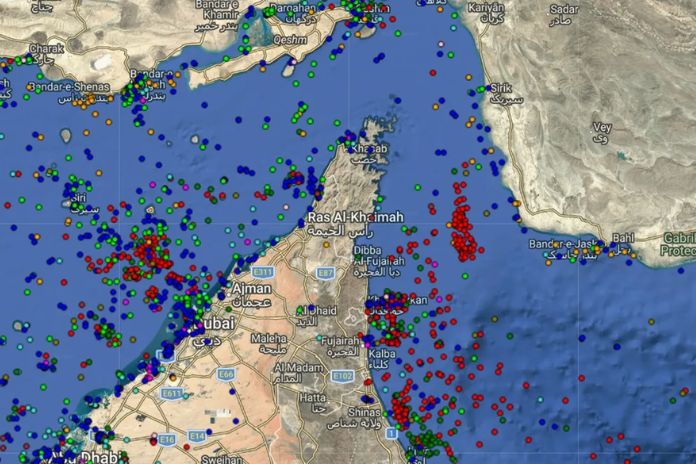
A central reason why the world is closely watching this crisis is the strategic importance of the Strait of Hormuz. Geographically, it is a narrow sea passage between Iran and Oman that connects the Persian Gulf to the Arabian Sea. Although Israel is not directly connected to this route, any disruption in the strait has far-reaching global consequences due to its role in energy transportation.
Nearly one-fifth to one-third of the world’s oil trade passes through this chokepoint, along with a significant portion of global liquefied natural gas exports, particularly from Qatar. This makes the Strait of Hormuz a critical artery of the global energy system. Any disruption can impact major economies, including India, China, Japan, South Korea and countries across Europe. Rather than enforcing a complete closure, Iran has historically relied on strategic pressure tactics such as threatening disruptions, harassing tankers or increasing naval activity in the region, using the strait as leverage against the United States and its allies.
Legal and Strategic Dimensions: Can Iran Close the Strait?
From a legal standpoint, the situation is complex. Under the United Nations Convention on the Law of the Sea (UNCLOS), key international straits are governed by the principle of transit passage, which restricts the ability of any one country to completely block maritime movement. Since both Iran and Oman share jurisdiction over the Strait of Hormuz, a full closure by a single country is neither legally straightforward nor practically easy.
However, this does not eliminate the possibility of disruption. Iran can still create strategic pressure through limited actions such as naval deployments, inspections or temporary interference, which can significantly impact global shipping without formally violating international law. This highlights how, in modern geopolitics, control over chokepoints can provide leverage far beyond territorial boundaries.
Military Dimension of the Conflict
The conflict also reflects the growing importance of advanced military technology and asymmetric warfare. Iran has deployed ballistic missile systems such as Sejjil, Kheibar Shekan and Khorramshahr variants, while Israel has relied on layered defence systems like Arrow and David’s Sling to intercept incoming threats. The United States has contributed through precision strike capabilities, including cruise missiles, along with advanced defence systems such as THAAD.
Earlier, Iran relied heavily on proxy networks to maintain pressure on Israel while avoiding direct confrontation. However, recent developments indicate a shift towards more direct engagement, increasing both the intensity and unpredictability of the conflict.
Global Economic Impact of the Conflict
The ongoing confrontation is already influencing global economic conditions, particularly in the energy sector. Any disruption involving Iran or the Strait of Hormuz has the potential to push oil prices upward, leading to inflation, higher transportation costs and economic slowdown in oil-importing countries. This situation draws parallels with the 1973 Oil Crisis, when geopolitical tensions led to a sharp rise in oil prices and widespread economic disruption.
Current trends indicate significant price volatility, reflecting how sensitive global markets are to developments in this region. Even the perception of risk is enough to influence pricing, demonstrating the interconnected nature of global energy markets.
Impact on India
India remains particularly vulnerable due to its dependence on energy imports. Although it has diversified its sources, including supplies from Russia and the United States, global price fluctuations affect all supply chains. Even when oil is sourced from relatively stable routes, pricing remains influenced by global benchmarks.
In addition, rising insurance costs, logistical challenges and supply uncertainties increase the overall import burden. LPG supply pressures further affect households and businesses, contributing to inflationary stress. This highlights that energy security is not only about access to resources but also about stable supply routes and geopolitical conditions.
Media Narratives in the Iran–Israel–US Conflict
The conflict is not only being fought on the battlefield but also through competing media narratives that shape global perception. Western media often frames Israel as acting in self-defence, portrays Iran as a destabilising force and presents the United States as a security guarantor. In contrast, Iranian media positions Iran as a resistance power opposing Western dominance and supporting the Palestinian cause.
Israeli media emphasises national security concerns and the perception of existential threat, while Gulf media reflects a more cautious and balanced stance, recognising Iran as a concern but also viewing large-scale conflict as a greater risk. At the same time, social media has intensified information warfare through selective visuals, misinformation and emotionally driven content, raising serious concerns about credibility and verification.
India’s position remains largely neutral, with its primary focus on energy security and the safety of its citizens in the region.
Conclusion
The unfolding crisis in the Middle East is not merely a regional conflict but a global geopolitical moment. The Strait of Hormuz illustrates how strategic geography can influence economic stability and international power dynamics. From rising fuel prices in India to uncertainty in global markets, the effects are already being felt far beyond the immediate conflict zone.
In today’s interconnected world, wars are no longer confined to battlefields; they extend into economies, information systems and global relations. The central question is no longer who controls the conflict, but how far its consequences will spread.