With the rising global instability and conflicts between different nations, the concerns of severe impact on the fourth largest economy are visible. The idea that history can repeat itself is often debated in the context of economic and political crises. India’s 1991 economic crisis, which culminated in LPG reforms, is often compared, marked by geopolitical conflicts and rising fuel prices.
1991 Economic Crisis in India
In 1991, India went through a phase of acute economic crisis. High fiscal deficit and import dependency led to inflation and loan of around $2.2 Billion from IMF (International Monetary Fund). At the same time, the gulf war caused a surge in oil prices and currency pressure on the country. Ultimately the rupee devalued to promote exports.
The loan from the IMF led to LPG Reforms in India. It was not merely to promote the economy, it was a necessity. The crisis forced India to shift from a state- controlled economy to a market- oriented model.
LPG Reforms (Liberalisation, Privatisation and Globalisation)
The crisis created structural reforms in the Indian economy known as LPG Reforms: Liberalisation, Privatisation and Globalisation. Liberalisation reduced restrictions, especially abolished License Raj on industries to enter into the market, contributed to global interconnectedness. While privatisation caused transfer of the ownership from government to private contender. For instance, Modern Food Industries was sold to Hindustan Unilever in 2000.
Although, privatisation was not explicitly used in 1991, rather Disinvestment and deregulation were used as mechanisms to promote privatisation to reduce government ownership in public sector enterprises. In the early phase, the government initiated disinvestment by selling partial stakes in public sector enterprises such as ONGC and GAIL. Meanwhile, BALCO and VSNL were initially disinvested and later privatised in 2001 and 2002 respectively. This marked a shift towards reduced state control.
At the same time, Globalisation opened the Indian economy for foreign investment, translated to global integration. The entry of multinational companies like Coca- Cola and McDonald’s after 1991 reflects India’s interconnectedness into the global economy. While the introduction of Suzuki in Maruti and Hyundai in the market, raised Foreign Direct Investment in India. The country also became a part of the global service economy, contributing to the boom of the IT sector with the emergence of Infosys and TCS.
Impact on India due to geopolitical uncertainty
The ongoing geopolitical tensions, particularly in Europe and West Asia, have significantly impacted India through rising energy prices, disrupted supply chains, and inflationary pressures. As a major oil- importing nation, India remains highly vulnerable to instability in these regions.
Begun in 2022, Russia – Ukraine war triggered severe disruptions in both the countries, including fluctuations in crude oil prices. The war reshaped India’s energy strategy, pushing it towards discounted Russian imports. Major exports of fertilisers, especially potash from Belarus and Russia, were disrupted due to the war. Consequently, global fertiliser prices import cost surged due to supply disruptions, leading to increased subsidy burdens on the government. This indirectly contributed to higher agricultural prices. Thereby, fertiliser disruptions translated into raised agricultural costs and inflationary pressure in India. However, India also began to diversify and found alternative suppliers.
Similarly, conflict in West Asia such as Israel and Hamas raised oil prices and affected maritime chokepoints severely. The war led to Houthi attacks and attacks on ships in the Red Sea, increasing the fear of shipping. The following trade route connects Europe and Asia via the Suez Canal, which contributes 12 percent of global trade.
Attacks in the Red Sea have exposed the vulnerability of global maritime chokepoints, directly impacting India’s trade efficiency and import costs. As the nation has to use a longer route via Caps of Good Hopes.
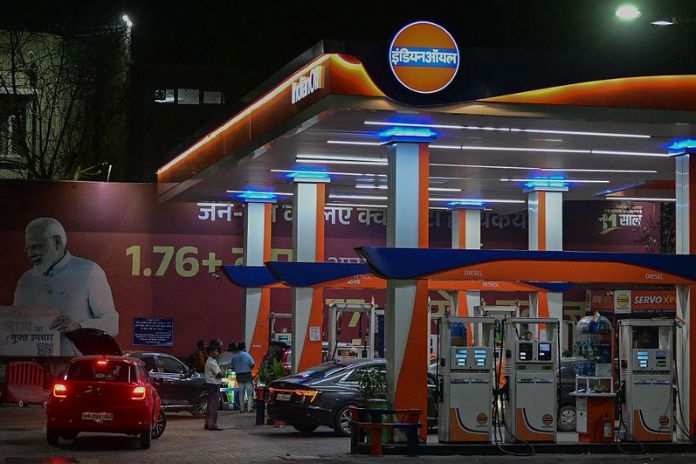
On the other hand, the most recent conflict among Israel- Iran and the US has significantly disrupted oil supply and increased shipping cost. Any disruption in the Strait of Hormuz can severely impact India’s oil imports, as a majority of its energy passes through this route. This is evident in the current price surge of LPG cylinders.
Furthermore, it has raised the concerns of rupee pressure, similar to the 1991 economic crisis. Unlike 1991, the current pressures are externally driven, but their domestic consequences- especially inflation and fiscal stress- remain significant.
India’s Response
India has maintained a neutral stance on every conflict, whether it’s Russia- Ukraine conflict or Israel- Hamas war. It also sustained alliance with Iran and the West, through calibrated diplomacy rather than direct alignment.
It nurtured its multi-alignment strategy by maintaining its ties with Russia by purchasing discounted oils. Its strengthening alliance with Israel and partnership with the west have further enhanced its diplomacy and soft power.
India can reduce its dependency from import goods by various renewable resources such as Green Hydrogen Mission, ethanol blending, solar rooftop revolution, battery storage ecosystem and Green shipping ports.
For instance, India’s push towards green hydrogen reflects a long-term strategy to reduce fossil fuel dependency and enhance energy security. While, The promotion of flex-fuel vehicles capable of running on ethanol blends can significantly reduce crude oil imports. Moreover, decentralised solar rooftop systems can reduce dependence on centralized fossil-fuel-based power grids. Likewise, developing a domestic battery storage ecosystem can ensure energy stability even with intermittent renewable sources.
At the same time, transitioning towards green ports and low-emission shipping can reduce energy import dependence in the logistics sector.
India’s challenge is not merely to navigate global crises, but to transform them into opportunities for long-term energy independence.
Economic Crisis vs Current Scenario
Although pressures may appear similar, India’s economic resilience today is significantly stronger than 1991.
Back in the past, India had weak market structures, low forex reserves and closed economy. While today, India has strong forex reserves, diversified economy and global interconnectedness, marking a shift towards a more stable market. India is transitioning from agriculture- based economy to a service- oriented model boosting manufacturing market. It is expanding manufacturing through initiatives like Production Linked Initiatives (PLI), targeting electronics, pharmaceuticals and engineering related goods, beyond traditional commodities. While economic pressure, rising prices and global influence are still existing terms in the current scenario, similar to the 1991 crisis.
Conclusion
History may not repeat itself in the same form, but it offers valuable lessons. While current challenges resemble past crises, India’s strengthened economic framework makes a 1991-like situation unlikely. India is no longer a fragile economy reacting to crises, but an adaptive economy capable of shaping its response.