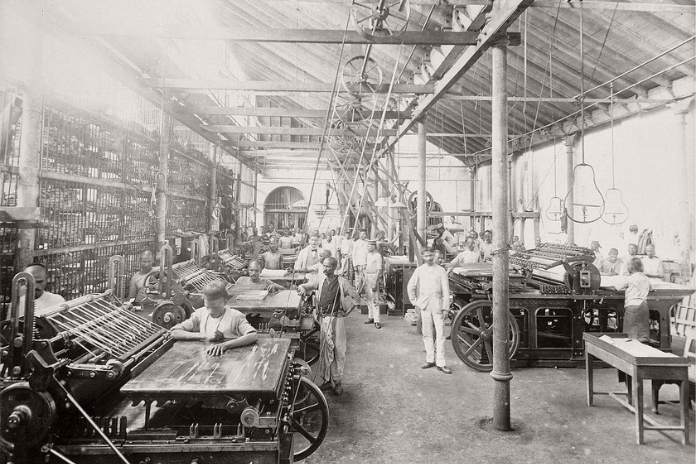
During colonial rule, the press functioned as a double-edged tool: initially supporting colonial administration, and later emerging as a powerful instrument of nationalist resistance. The early press remained largely English-dominated, but gradually expanded with the rise of vernacular newspapers and mass political awakening.
Colonial press policies were not merely regulatory but political instruments designed to control dissent, ultimately contributing to the growth of a more assertive nationalist press. This reflects the contradiction between colonial liberal ideals and imperial control.
Early Phase: Control without Structured Nationalism (1799–1823)
Early press laws reflected colonial anxiety over ideological contagion rather than organised nationalism.
The Censorship of Press Act, 1799 was introduced in the backdrop of the French Revolution and Tipu Sultan’s resistance, which heightened colonial insecurity. It imposed pre-censorship and security deposits, making anti-government publications illegal. Although introduced under colonial authority, it was enforced by Governor-General Lord Wellesley as an emergency measure and later abolished by Lord Hastings in 1818. It represented a clear instance of colonial authoritarianism, restricting press freedom across both Indian and English newspapers.
The Licensing Regulations, 1823 under Governor-General John Adams marked a shift by introducing a mandatory licensing system. Printing without a license was declared illegal, and the government retained the power to grant, deny, or revoke licenses. These provisions, combined with pre-censorship, reflected administrative anxiety and disproportionately targeted Indian and vernacular press, while pro-British English newspapers remained relatively secure. The act was thus highly preventive and repressive in nature.
Liberal Phase: Temporary Relief (1835)
The Metcalfe Act, 1835 introduced by Governor-General Charles Metcalfe replaced the licensing system with a registration-based declaratory system. This marked the first formal recognition of press freedom, earning Metcalfe the title “Liberator of the Indian Press.”
However, this freedom was not absolute, as laws related to sedition and defamation continued to operate. While intended to ensure administrative transparency, the act unintentionally contributed to the growth of political consciousness and public debate.
Repressive Phase: Nationalism vs Empire (1857–1908)
With the rise of nationalism, colonial control became more direct and coercive.
The Gagging Act, 1857, introduced by Lord Canning during the Revolt of 1857, reflected deep colonial insecurity regarding mass mobilisation through indigenous languages. It reintroduced the licensing system and empowered the government to suppress and confiscate publications. Though temporary, it symbolised the use of press control as a political weapon.
The Vernacular Press Act, 1878 revealed explicit discrimination by targeting only vernacular newspapers, leaving English publications unaffected. It exposed colonial insecurity towards Indian-language press and nationalist expression. Newspapers like Amrita Bazar Patrika shifted overnight to English to evade restrictions, while others such as Som Prakash, Bharat Mihir, and Dacca Prakash faced legal action. The act was repealed in 1881 by Lord Ripon, marking a partial reconciliation between the press and the colonial state.
The Press (Incitement to Offenses) Act, 1908 was introduced amid rising nationalist movements and the aftermath of the Partition of Bengal (1905). It enabled direct censorship of writings, images, and political content deemed seditious. Newspapers such as Yugantar, Sandhya, and Kesari faced severe repression, with many publications suppressed or forced to cease operations.
The Indian Press Act, 1910 further intensified control by introducing financial mechanisms such as heavy security deposits, leading to the economic suffocation of nationalist newspapers. It extended censorship to speeches, pamphlets, and visual materials, disproportionately affecting vernacular publications.
Censorship during World Wars: Expansion of Control
The Defence of India Act, 1915 introduced wartime censorship, equating nationalist expression with disloyalty. It granted sweeping powers to the government, including censorship, confiscation, and arrest of editors. This marked the beginning of fear-based journalism.
The Defence of India Act, 1939 further centralised control during World War II. Along with the Press Emergency Powers Act, 1931, it imposed strict censorship, controlled war reporting, and suppressed anti-colonial expression. Many publications, including those associated with Mahatma Gandhi, were restricted or shut down.
Wartime censorship, justified in the name of imperial security, functioned as a tool to suppress nationalist mobilisation and control public opinion, turning the press into both a target of repression and an instrument of propaganda.
Role of Press in the Freedom Struggle
Despite repressive measures, the press played a crucial role in spreading political consciousness and nationalist ideas. Repressive policies paradoxically strengthened the press by radicalising its tone and expanding its reach.
Leaders like Bal Gangadhar Tilak, through Kesari and Maratha, mobilised mass political awareness, while Mahatma Gandhi’s Young India, Harijan, and Navjivan promoted Gandhian philosophy. Other newspapers such as Sudha Varshal, Benaras Akhbaar, and Gujarati Mitra contributed to anti-colonial discourse and public awakening.
Conclusion
Colonial press policies, though authoritarian in intent, ultimately failed to suppress dissent. Instead, they contributed to the emergence of a politically conscious and resilient press that became a vital force in India’s freedom struggle.