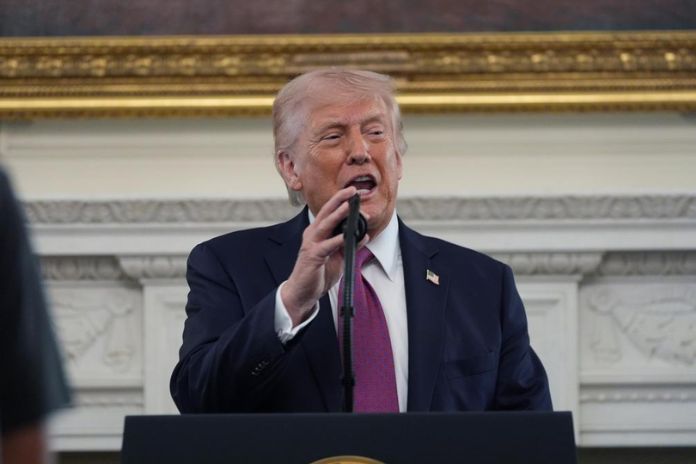
President Donald Trump has signaled that “good news” on renewed peace talks between the United States and Iran could come as soon as Friday, a move that has raised cautious hopes of a de‑escalation in the ongoing war. Pakistani mediators have also suggested that a second round of discussions may begin within the next 36 to 72 hours, as both sides navigate a fragile ceasefire and rising regional tensions.
Trump extends ceasefire with Iran
On Tuesday, Trump announced that the U.S. would extend its ceasefire with Iran, responding to a request from Pakistani envoys. In a social‑media statement, he said Washington had agreed to hold off on any further attack on Iran while Tehran’s leadership works on a unified proposal for negotiations. Pakistani sources told media outlets that the delay is meant to give Iranian leaders time to coordinate a clear position ahead of potential direct or indirect talks in Islamabad.
The extension adds momentum to earlier rounds of Pakistan‑mediated dialogue, in which U.S. Deputy Secretary of State Richard Armitage and senior Iranian diplomat Abbas Araqchi held intensive talks aimed at ending hostilities and stabilizing the region. U.S. officials have described those earlier negotiations as “intense but promising,” though no final agreement has yet been signed.
Focus shifts to a second round of talks
Pakistani security and diplomatic sources told The New York Post that the window for a second round of US‑Iran talks could open within 36 to 72 hours if both sides show flexibility. The talks are expected to focus on three core issues: a permanent ceasefire, reciprocal limits on missile and drone activity, and a framework for restoring basic diplomatic and economic channels.
Trump’s public optimism about a possible breakthrough by Friday appears aimed at building domestic and international support for a negotiated settlement. However, skeptics warn that historic mistrust between Washington and Tehran, along with deep involvement from Israel and regional actors, still makes a lasting deal difficult.
Ship attacks in Strait of Hormuz complicate talks
On the same day Trump extended the ceasefire, tensions flared in the Strait of Hormuz, one of the world’s most critical oil‑shipping routes. The British military reported that at least three cargo ships came under attack in the narrow waterway, underscoring the fragile environment in which the peace talks are being held.
Iran’s paramilitary Revolutionary Guard has claimed responsibility for the incidents, saying the targeted vessels were commercial ships linked to countries supporting U.S. actions in the region. According to maritime sources, one cargo ship reported being fired upon and forced to stop in the water, although it suffered no visible damage. The other two attacked ships were also cargo vessels, raising concerns about the safety of global shipping during the ongoing conflict.
These attacks highlight how quickly military posturing can undermine diplomatic progress. Even as officials in Washington, Islamabad, and Tehran talk of “good news” on peace, operations at sea and in the air continue to test the credibility of any ceasefire.
Regional stakes and the Israel‑Iran‑US triangle
The broader war remains closely tied to tensions between Iran and Israel, with the U.S. acting as Israel’s main military and political backer. Israeli officials have expressed mixed reactions to the Pakistan‑mediated talks, with some hard‑liners warning that any premature deal could give Iran breathing room to rebuild its capabilities.
At the same time, regional governments around the Persian Gulf worry that prolonged conflict could disrupt energy supplies, drive up oil prices, and deepen instability across the Middle East. Many analysts see enforceable restrictions on missile and drone use, as well as clearer rules of engagement for naval forces, as essential to any durable ceasefire.
What to watch ahead
If the second round of talks materializes within the next few days, key indicators will include whether both sides agree on:
- A verifiable, long‑term ceasefire.
- Limits on attacks on shipping and energy infrastructure.
- A mechanism for monitoring and enforcing any deal.
For now, Trump’s promise of “good news” by Friday offers a tentative path toward de‑escalation, but the attacks in the Strait of Hormuz serve as a reminder that the road to peace remains narrow and dangerous.