Democracy promises to empower every citizen, but what happens when citizens are misinformed, emotionally driven, or deliberately manipulated?
The answer is complex—and uncomfortable.
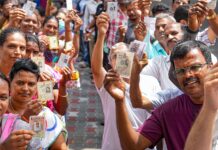
At its best, democracy is a powerful tool for justice and inclusion. It promotes accountability, protects human rights, and rests on the principle of equality—ensuring that no individual is discriminated against on the basis of caste, gender, religion, race, or access to public services.
By allowing people to choose their leaders, democracy makes elected representatives accountable to the public, encouraging transparency and responsible governance.
Democratic systems also provide peaceful mechanisms—dialogue, debate, negotiation, and legal remedies—for resolving conflicts.
Fundamental freedoms such as speech, expression, assembly, movement, and religion allow citizens to question authority and participate actively in public life. Economically, democracies tend to foster stable and sustainable growth by encouraging innovation, investment, and entrepreneurship. Greater emphasis on education and healthcare contributes to a productive workforce
Studies suggest that democratization can increase GDP per capita by 20–25% over 25 years. This trend is visible in India, projected to grow at 7.4% in 2025–26 due to structural reforms, governance stability, and investment in human capital.
However, democracy can also fail its people—particularly when popularity replaces principle. One major risk is populism, where emotional appeals overshadow rational policymaking. Populist leaders often weaken institutions such as the judiciary, media, and opposition by framing politics as an “us versus them” struggle. While claiming to represent the “will of the people,” they frequently centralize power, marginalize minorities, and prioritize short-term gains over long-term stability.
Another concern is emotional voting. When fear, anger, or misinformation drive electoral choices, democracy becomes vulnerable to manipulation. False narratives polarize societies and make meaningful dialogue increasingly difficult.
This was evident during the COVID-19 pandemic, when expert advice was often overshadowed by misinformation and mass hysteria.
The criminalization of politics further undermines democratic trust. Section 8 of the Representation of the People Act, 1951 disqualifies only convicted individuals, not those merely charged.
As a result, figures such as Amritpal Singh, who contested and won the 2024 Lok Sabha election while imprisoned but not convicted, could legally participate. Similarly, Phoolan Devi, elected to Parliament in the 1990s, faced multiple criminal cases. Such precedents raise serious concerns about electoral integrity.
Philosopher Plato famously criticized democracy in The Republic, arguing that governance requires expertise, not popularity. He warned that excessive freedom could lead to disorder and, ultimately, tyranny—where citizens seek a strong leader who dismantles democratic norms.
Compared to democracy, authoritarian systems can act swiftly and enforce policies efficiently. China demonstrates rapid economic growth but at the cost of civil liberties, accountability, and individual freedoms.
Ultimately, democracy itself is not the problem—the quality of citizenship is. With only about 38% of Indian households digitally literate, media literacy and civic education are crucial. As the fourth pillar of democracy, the media must inform rather than manipulate.
Democracy is neither a blessing nor a disaster by default. It is a mirror—reflecting the society that practices it.