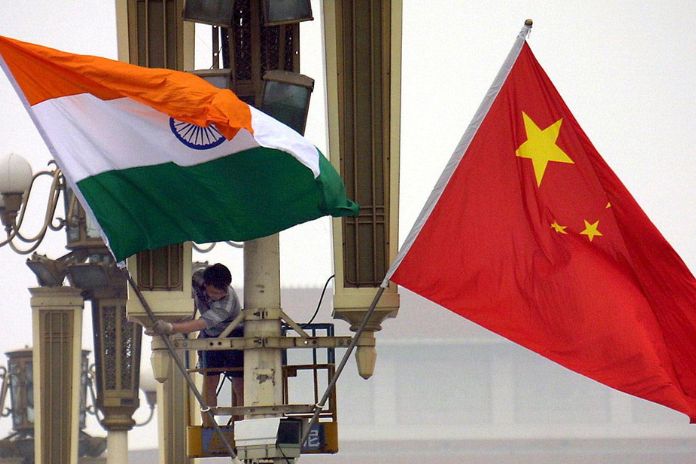
In 2025 India‑China ties have taken a noticeably warmer turn. After years of tension, the two governments announced the reopening of border trade through the three high‑altitude passes — Lipulekh in Uttarakhand, Shipki La in Himachal Pradesh and Nathu La in Sikkim. The move was cemented during Chinese Foreign Minister Wang Yi’s first visit to New Delhi in three years, where both sides also agreed to set up a new Working Group under the Working Mechanism for Consultation and Coordination (WMCC) to keep the Line of Actual Control stable.
At the same time, high‑level political engagement intensified. Prime Minister Narendra Modi met President Xi Jinping on the sidelines of the Shanghai Cooperation Organisation summit in Tianjin, pledging to resolve border disputes and restore “peace and tranquillity” along the LAC . ⁴ That meeting paved the way for practical steps such as the resumption of direct commercial flights in October 2025 and the launch of an online visa system for Indian travellers, slated to go live on 22 December 2025.
Economically, trade remains robust but heavily skewed. Bilateral trade hit $138 billion in 2024, with India’s imports from China surging about 11 % in the first ten months of 2025, widening the deficit to roughly $99 billion . To address this, India is promoting domestic manufacturing through “Make in India” and selectively easing certain import curbs on critical Chinese raw materials.
However, the tensions cannot be ignored.
CAUSES OF TENSIONS:
The Indo- Sino tensions are driven by multiple factors and complex interplay of historical border disputes, where both the nations are competing for regional and global influence. This has been exacerbated by recent developments in the region.
The first issue is its no clear demarcation with no mutually agreed LAC (Line of Actual Control). The Indo-Sino border is mainly divided into three sectors, which came into existence after the 1962 war. The border includes, the Western Sector, Middle Sector and Eastern Sector. The Western Sector is Aksai Chin region, which is claimed by both countries as a part of their own territory. In light of this, the two nations are intact at their own stands on the Johnson Line and Mc Donald line, which marks the territories of the two.
India accepted the Johnson Line as a demarcation, which means that Aksai Chin is an indian territory. Meanwhile, the McDonald line marks Aksai Chin as Chinese territory. The Middle Sector is an area in Uttrakhand, Which China claims as its territory. This creates a border dispute.
Although, it’s worth noting that China has recognised India’s sovereignty over Sikkim and had initiated the trade at Nathu La pass, Doklam fiasco, which could mean that trouble is at the end. At last, the Eastern Sector, which is the McMahon line, is the boundary between India and Tibet, which is disputed in China.
However, it has continued to assert its claims over the territory. Nowadays, China claims the whole of Arunachal Pradesh. This is also the reason, behind the Dalai Lama’s visit to Tawang Monastery. This also became such a contentious bilateral issue.
Moreover, Sino-Pakistani border agreement, which cedes a part of Pakistani-administered region, Shaksgam Valley to China. This affects its claims in the region and this is the reason, that raised concerns over this agreement.
The second factor that sparks the tensions is the string of pearls, where China’s strategic presence and infrastructure development in the countries surrounding India, like Srilanka, Pakistan, Maldives, Bangladesh and Myanmar, this raises concerns about encirclement. This strategy involves the construction of a chain of naval and military bases in the regions.
Its foray into the Indian Ocean is also a part of this strategy. Here, China aims to counter India’s growing influence. This demonstrates that China conveys the message that either it will be China’s way or the highway. It is the time for India to submit or lose sight of China’s nefarious intentions in the region.
The third factor is the dispute over water, where China is constructing a dam over Brahmaputra River, without a formal water sharing treaty. This poses a threat to India.
The uncertainty of water releases from the upstream dam could disrupt traditional farming cycles, which ultimately affects several livelihoods, who are dependent on the water flows. Indian states like Assam, and Arunachal Pradesh, which prominently depend on Brahmaputra River flows for both agriculture and fisheries, will face significant vulnerability. It may also impact the livelihood of tribals in the Siang region of Arunachal Pradesh such as Adi Tribe. More than that, if sudden water releases at a high amount, it may lead to potential floods. While reduced flows during dry seasons could alter irrigation and power generation projects.
The fourth issue is, Dalai Lama and Tibet, where China accuses India for fomenting trouble in Tibet due to the Dalai Lama’s presence and protests by Tibetans against China in India and other countries. The fifth issue, that causes tensions between both nations is Arunachal Pradesh and stapled visa, where China had issued stapled visas to Arunachal Pradesh’s residents. Stapled visa is the type of visa that is attached to a paper instead of being attached to the passport. China issues stapled visas to Arunachal Pradesh’s residents to avoid recognising the state as a part of indian territory. As China asserts territorial claims over the state by calling it “South Tibet”. The recent incident occured in 2023, where 12-member Wushu team from the state was stopped for competing in the event after three members recieved stapled visas.This issue has been repeated in various contexts, including sports teams and diplomatic efforts.
India has consistently protested against this move of issuing stapled visas to Arunachal Pradesh’s residents, calling it as “unacceptable”. This issue has been repeated in various contexts, including sports teams and diplomatic efforts.
The sixth issue is the South China Sea, where China has claimed it as their territory, which poses concerns for its freedom of navigation and stability in the region. This also affects India’s Strategic interests by threatening the security of vital sea trade, which relies on the SCS. These claims create instability and raise concerns about greater Chinese military presence in Indo-Pacific, which not only affects India’s own regional security but also relations with Southeast Asian nations. However, it’s worth mentioning that India has also significantly increased its military sales and assistance to the Philippines and Vietnam.
In 2022, India reached a deal with the Philippines for an export of 100 BrahMOS supersonic anti-ship missiles. What’s more, in 2023, Vietnam became the first country to receive a fully operational light frigate from India. As tensions spiked between China and the Philippines over the confrontations on SCS. India announced that it would offer at least 7 helicopters for the rescue and humanitarian efforts of the PCG during natural disasters to the Philippines. This also demonstrates India’s strategic interests as well as a grip and influence in the region.
The seventh factor is India’s neutral stance. India has maintained a neutral stance and opinions, which often claims India as a fence-sitter. India has maintained neutral opinions several times. For example., India’s disagreement on China’s Belt and Road Initiative.
All these factors, raised China’s concerns and Beijing is wondering that India could be a new “troublemaker”. This label is generally used for the USA. What’s more, all these factors and issues have significantly contributed into border disputes between both the nations. The most recent dispute is 2017’s Doklam Standoff and 2020’s Galwan Valley Clashes.