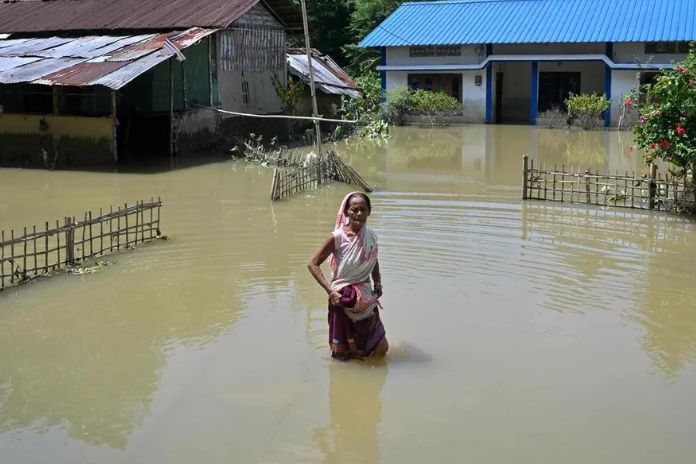
Assam is facing one of its most serious flood crises in years. Heavy rain, swollen rivers and fresh inundation have kept several districts underwater, even as the situation briefly improved in some areas. The latest reports show that the flood toll has climbed to 89, while more than 1.22 lakh people remain affected across five districts.
Sivasagar is the worst-hit district, followed by Charaideo and Jorhat. Relief camps are operating in affected areas, rescue teams are working to help stranded families, and officials are monitoring river levels closely as more rain threatens to worsen the situation again.
Why Assam floods so often
Assam floods every year because of its geography. The state lies in the Brahmaputra river basin, where huge volumes of water flow through a wide floodplain during the monsoon season. When rainfall is heavy in Assam or in the upstream hills of neighboring states, rivers and tributaries can rise quickly and overflow into nearby villages and farmland.
This natural vulnerability has been made worse by human activity. Experts point to deforestation, wetland loss, siltation in rivers and embankment damage as major reasons floods have become more destructive over time.
Why this year’s floods became severe
This year’s flooding was not caused by a single event. Reports say unusually heavy rain in upstream catchments, fast runoff from hilly areas and sudden surges in tributaries triggered widespread flooding across Upper Assam. In some places, water arrived before the Brahmaputra itself reached its peak, creating a dangerous bottleneck.
That is why districts that are not always the worst-hit during normal flood seasons were also badly affected. Lower-lying areas, farm fields and transport links suffered major damage, while many families were forced to move to relief camps or temporary shelters.
What the damage looks like
The floods have damaged homes, roads, farmland and public infrastructure. In many affected areas, agricultural land remains submerged, which could hurt farmers even after the water recedes.
Urban flooding has also been reported in parts of Guwahati, showing that the crisis is not limited to rural districts alone. In some locations, even basic movement and relief access have become difficult because of waterlogging and damaged roads.
What happens next
The immediate focus is on rescue, relief and rehabilitation. Authorities are distributing aid, running relief camps and keeping a close watch on weather forecasts because more rain could trigger fresh flooding.
In the long term, Assam will need stronger flood management, better river basin planning, healthier wetlands and more resilient embankments. Without deeper structural fixes, the state is likely to keep facing the same cycle of flooding year after year.