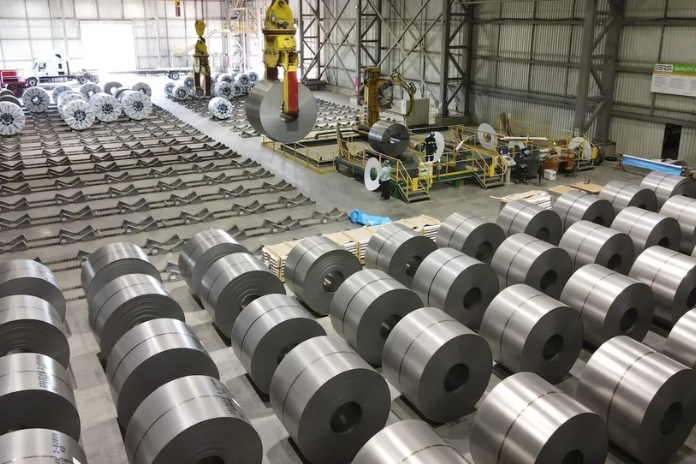
India and the United Kingdom wrapped up trade negotiations a year ago, yet their landmark Comprehensive Economic and Trade Agreement (CETA) has not yet been implemented. The main obstacle: a disagreement over how much Indian steel the UK will allow in without facing heavy tariffs.
To break this logjam, India has formally requested a $900-million annual steel quota from the UK. This figure matches the three-year average of India’s steel and steel product exports to Britain, according to Indian government officials.
Steel Industry Warns of Export Cuts
The push for a larger quota came after India’s steel industry raised serious concerns. Industry leaders warned that the quotas the UK announced would actually limit exports below current levels, even with the free trade agreement in place.
Under the UK’s proposed rules, starting July 1, 2026, tariff-free steel import quotas will drop by 60%. Any shipments exceeding the quota face a steep 50% duty—effectively wiping out the FTA’s zero-duty advantage that was meant to boost Indian exports.
India exported approximately $897.68 million in steel to the UK in FY26, making the UK a critical market for Indian steelmakers.
Retaliation Threat: Scotch whisky on the Table
Indian government officials have made their position clear: if the UK does not agree to fair terms, India will take retaliatory action. The targeted product? Scotch whisky, one of Britain’s most valuable export goods to India.
“India will move to curb Scotch whisky as a retaliatory measure if Indian interests are hurt,” government officials stated. This signals that the steel dispute could spill over into other sectors of the trade relationship.
Breakthrough: 85% of Exports Now Protected
Despite the ongoing tension, there is positive progress. As of June 17, 2026, India has secured protection for 85% of its steel exports to the UK. This protection comes through a combination of:
- A country-specific quota for India
- A residual quota for additional shipments
- An Authorised Use Scheme allowing exporters to utilize available quota space
This breakthrough means the majority of Indian steel shipments will remain outside Britain’s upcoming steel safeguard measures.
Push to Operationalise Deal by Mid-July
Commerce Secretary Rajesh Agrawal confirmed that both nations are working on what he called a “unique and creative solution” to address the UK’s steel safeguard measures. The goal is to fully operationalise the CETA trade pact by July 15, 2026.
The UK’s steel import curbs emerged as the key hurdle delaying the agreement’s launch, according to government officials.
Why This Matters for Trade Relations
The India-UK CETA, signed in July 2025, promised zero-duty access on steel—previously taxed at up to 10%. But the combination of shrinking quotas and the upcoming UK Carbon Border Adjustment Mechanism (CBAM) in January 2027 creates new challenges for Indian exporters.
For India’s MSME sector, which dominates the engineering export base, the quarterly quota system is particularly problematic. Missing a quota window means losing market access entirely.
What India Wants Moving Forward
The Indian government has outlined several solutions to resolve the dispute:
- An India-specific quota carve-out within the UK’s new regime
- Reciprocal compensation in services and financial sectors
- Faster decarbonisation to prepare for the UK carbon tax
- A domestic Trade Remedies framework built for protectionist global conditions
The Bottom Line
India’s demand for a $900-million steel quota represents more than just a trade negotiation—it’s a test of whether the India-UK partnership can deliver real market access for Indian manufacturers. With 85% of exports now protected and both sides working toward a July 15 operationalisation date, the deal appears to be moving forward.
However, the threat of hitting Scotch whisky exports shows India is prepared to escalate if its steel industry’s interests remain unprotected. The coming weeks will determine whether this landmark trade agreement finally becomes operational or remains stalled by protectionist measures.