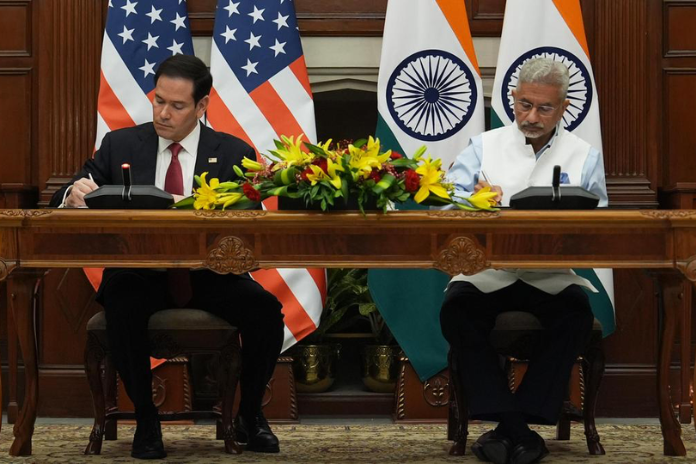
India and the United States have finalized a key bilateral framework to secure supplies of critical minerals and rare earths across their entire value chain, from mining and processing to recycling and investment. The agreement, signed on the sidelines of the Quad Foreign Ministers’ meeting in New Delhi, marks a strategic move to reduce dependence on China, which currently dominates global critical minerals markets.
External Affairs Minister Dr. S. Jaishankar and U.S. Secretary of State Marco Rubio formally firmed up the cooperation framework during the high-level meeting. Both ministers emphasized that the pact is timely and critical for strengthening resilient supply chains essential for modern technology and defence systems.
What the Deal Covers
The framework spans the full lifecycle of critical minerals:
- Mining exploration and resource development
- Processing and refining capabilities
- Recycling technologies to recover minerals from end-of-life products
- Joint investments in projects across India, the U.S., and third countries like those in Africa
This comprehensive approach aims to create diversified, secure supply lines for minerals essential to semiconductors, clean energy systems, electric vehicle batteries, defence technologies, and consumer electronics.
Why China’s Dominance Matters
China controls a majority share of global critical minerals processing and has recently imposed tighter export controls on rare earth elements and strategic metals. These move have heightened concerns among allied nations about supply chain vulnerabilities.
India, recognizing this risk, is planning a six-month strategic reserve of key minerals like lithium and cobalt. The U.S.-India pact complements this effort by building joint capacity and reducing reliance on Chinese sources.
Notably, about 80% of the critical minerals on the U.S. strategic list overlap with India’s list. This strong alignment enables deep cooperation, including joint exploration and development projects in resource-rich regions such as Africa, where both nations can invest together.
Strategic Importance for India and the U.S.
For India, the deal strengthens its position as a reliable partner in the global clean energy and technology ecosystem. It supports India’s ambitions in electric mobility, renewable energy, and advanced manufacturing while reducing exposure to Chinese supply shocks.
For the U.S., partnering with India diversifies its supply base and builds a counterweight to China’s growing influence in critical resource markets. The cooperation also aligns with broader Quad objectives of enhancing Indo-Pacific security and economic resilience.
Jaishankar noted that such cooperation can work whether done bilaterally, within the Quad framework, or through larger coalitions of like-minded nations. The essential point, he said, is ensuring secure and effective management of these vital resources.
What Comes Next
Both countries will now focus on:
- Identifying specific mining and processing projects for joint investment
- Establishing mechanisms for technology transfer and capacity building
- Coordinating policies to streamline regulatory approvals
- Exploring third-country partnerships, especially in Africa and Latin America
The framework is expected to accelerate project approvals, attract private sector investment, and foster innovation in critical minerals technologies.
This India-U.S. critical minerals deal represents a significant step toward building a more balanced, secure, and sustainable global supply chain. By working together, India and the United States aim to reduce strategic vulnerabilities, counter China’s dominance, and support the clean energy and technology transitions that are central to 21st-century economic and security interests.