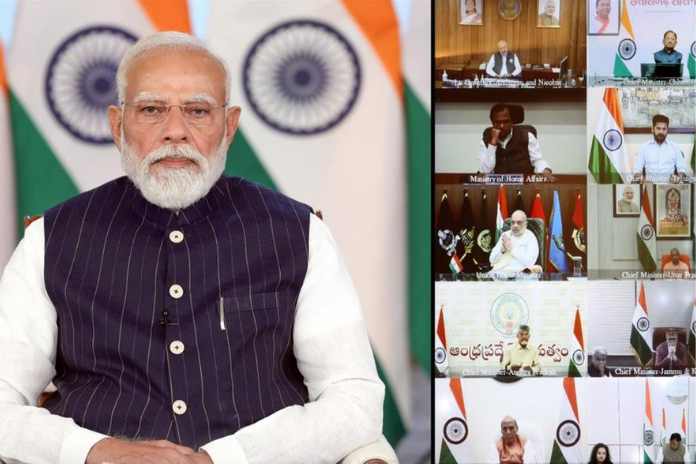
Prime Minister Narendra Modi has concluded a high‑level virtual meeting with most state chief ministers on Friday, 27 March 2026, to review India’s preparedness amid the escalating West Asia conflict involving Iran, Israel, and the United States. The meeting was held via video conference and focused on how the war could affect energy security, fuel supplies, inflation, and supply‑chain logistics across the country.
Why the West Asia conflict matters for India
India imports a large share of its crude oil and gas from the Middle East, much of it passing through sensitive routes such as the Strait of Hormuz and Gulf sea lanes. Even limited disruptions or heightened military activity in the region can push global crude prices higher, which in turn affects India’s forex reserves, fuel pricing, and overall economic stability.
In the past few weeks, several airlines have rerouted flights and cancelled some services due to airspace restrictions over Iran and parts of West Asia. Global markets have also seen volatility in energy and shipping costs. Against this backdrop, the PM Modi meeting with CMs on West Asia conflict was aimed at ensuring that the Centre and states are on the same page to contain any domestic fallout.
What was discussed in the meet
Sources familiar with the meeting said that PM Modi urged all chief ministers to adopt a “Team India” approach in dealing with the West Asia crisis. The Centre stressed that there should be no panic buying, no hoarding, and no rumour‑driven inflam‑mation about potential fuel shortages. The idea is to coordinate policies so that any disruption at the global level does not translate into chaos on the ground.
State governments shared their contingency plans for managing fuel distribution, LPG and cooking‑gas availability, and transport bottlenecks. Special attention was given to states that are more vulnerable to price shocks, such as those dependent on imported energy or long‑distance freight movement via the Arabian Sea‑facing routes. The Centre also asked states to keep a close watch on black‑marketing, localised shortages, and price spikes in essential commodities.
The meeting touched upon the risk of misinformation on social media and advised state administrations and police to act swiftly against any deliberate attempts to create panic or spread false rumours about fuel or food shortages. The Centre highlighted the need for real‑time coordination between central ministries—such as Petroleum, Shipping, Civil Aviation, and Home Affairs—and state authorities.
Energy security and preparedness
PM Modi reiterated that India must be “prepared for the long term” impact of the West Asia war, drawing a parallel with the calibrated, multi‑agency response during the COVID‑19 pandemic. This includes better stock‑piling strategies, diversification of supply routes where possible, and stronger coordination between public‑sector oil companies and private distributors.
Officials noted that the Centre is closely monitoring global crude prices, shipping insurance costs, and air‑freight patterns. Any signs of sustained pressure on these fronts will be flagged immediately to states so that local authorities can adjust pricing controls, distribution schedules, and public messaging accordingly.
The Prime Minister also asked states to review their disaster‑management and emergency‑response frameworks to factor in possible indirect effects of the war, such as disruptions in remittances, return of Indian workers, or changes in trade flows and export demand.
Political and economic messaging
The fact that Modi chose to hold a dedicated CM‑level meeting on the West Asia conflict signals how seriously the government views the external risks. It also sends a political message that the Centre is acting proactively to protect the economy and public welfare, rather than waiting for a crisis to hit.
Officials accompanying the Prime Minister said the meeting ended on a coordinated and confident note, with states agreeing to stay in close touch with the Centre and share regular updates. The Centre, in turn, assured that it would continue to use its diplomatic and economic levers—including engagement with friendly energy‑producing countries and use of strategic reserves—to cushion India from the worst of the West Asia war’s impact.
For now, the government is telling people that fuel supplies remain stable, but that preparedness, coordination, and calm communication between the Centre and states are essential as the West Asia conflict continues to evolve.