The United States and Iran have exchanged fresh fire in West Asia, ending a brief lull in a war that has now lasted six months. The latest round of clashes began with U.S. raids on Iranian coastal targets and was followed by Iranian missile and drone attacks on American bases across the Gulf and in Jordan.
How the latest escalation unfolded
On Sunday, U.S. forces struck two Iranian sea‑mine launcher sites on Larak Island in the Strait of Hormuz. Washington said the Islamic Revolutionary Guard Corps (IRGC) was preparing to fire sea‑mine rockets into the strategic waterway, prompting the pre‑emptive attack. It was the first publicly identified U.S. strike inside Iranian territory since late July.
Iran responded with a wave of missile and drone strikes targeting U.S. military positions in Jordan, the UAE, Kuwait, Bahrain and Iraq’s Kurdistan region. The attacks marked the heaviest exchange between the two sides since July and raised fears of a wider regional war.
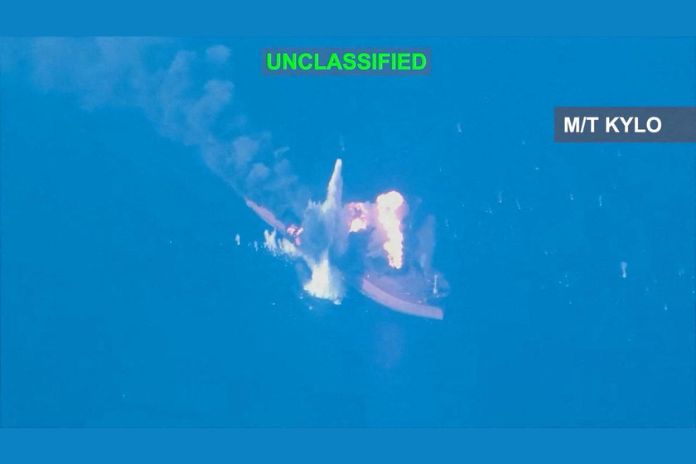
In the same period, two oil tankers leaving the Strait of Hormuz were hit in unclaimed attacks, adding to concerns about the safety of global energy shipments through one of the world’s most important chokepoints.
Casualties and claims
Iran’s health ministry said 18 people were killed and 108 wounded in the latest U.S. strikes across the country. The Iranian Red Crescent reported four people were killed and 67 wounded at a wedding ceremony near the Strait of Hormuz coast, blaming U.S. fire. U.S. officials have not confirmed details of the wedding strike.
Iranian state media and officials have vowed further retaliation, while U.S. authorities have warned of additional strikes if attacks on shipping or American bases continue.
A six‑month war at an impasse
The fighting is part of a broader U.S.–Iran conflict that began in February 2026. Despite periodic de‑escalations, neither side has achieved a decisive advantage. Iran has used its geography and asymmetric capabilities to effectively choke the Strait of Hormuz, disrupting a critical oil transit route. The U.S. has responded with a counter‑blockade of Iranian ports and targeted air campaigns against IRGC assets, including mine‑laying infrastructure.
This pattern has produced a costly stalemate: global markets face repeated shocks from supply fears, while regional states hosting U.S. bases risk being drawn deeper into direct exchanges.
Mediation efforts and regional stakes
Mediators, including Qatar, are pushing for renewed U.S.–Iran dialogue, warning that tit‑for‑tat attacks could widen the war and pull Gulf allies more directly into the fight. Doha has urged both sides to exercise restraint as diplomatic efforts intensify to break the deadlock after six months of fighting.
The stakes are high for the Gulf, where energy exports underpin national budgets and global supply chains. Any sustained disruption to the Strait of Hormuz or Iranian ports would quickly translate into higher oil prices and inflationary pressure worldwide.
Market impact
Oil prices jumped to fresh six‑week highs on concerns over supply disruptions from West Asia following the renewed U.S. strikes on Iran and heightened regional tensions. Traders are watching for signs of further escalation that could threaten flows through the Strait of Hormuz.
What to watch next
- Whether Iran carries out additional strikes on U.S. bases or shipping in the Gulf
- If the U.S. expands its campaign against IRGC infrastructure inside Iran
- How Gulf states balance hosting U.S. forces with avoiding direct confrontation
- Whether mediation efforts, led by Qatar, can produce a temporary de‑escalation or interim understanding
For now, the U.S.–Iran exchange of fresh fire underscores a dangerous phase in a six‑month war with no clear end in sight, and with global energy markets paying close attention.