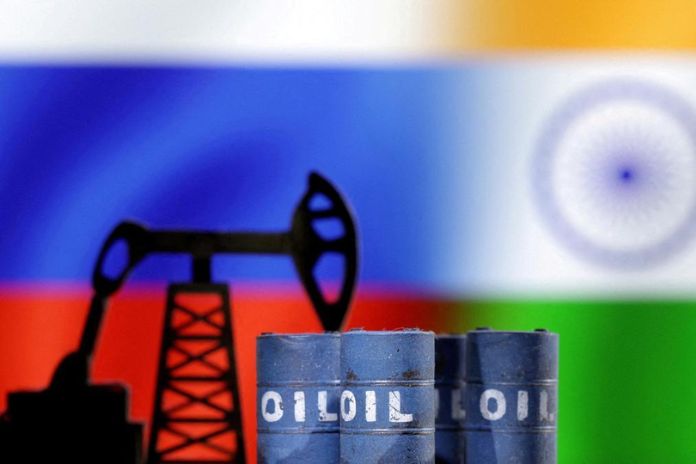
Russia’s share in India’s oil imports has reportedly climbed to 48%, marking a sharp increase in New Delhi’s dependence on Russian crude. The rise comes at a sensitive time, as the United States moves closer to approving legislation that could impose tariffs of up to 100% on countries that continue buying Russian oil and gas.
The US Senate has passed the Lindsey O. Graham Sanctioning Russia and Iran Act of 2026. The legislation cleared the chamber with bipartisan support and will now be considered by the House of Representatives. If approved by both chambers and signed into law, the measure would give the US president the authority to impose higher duties on goods imported from major purchasers of Russian energy.
The bill focuses on the five largest buyers of Russian crude oil and natural gas. It also targets countries allegedly helping Russia evade international sanctions. India and China are widely expected to face the greatest exposure because of their substantial purchases of Russian energy.blumenthal.
However, the proposed tariff would not automatically be fixed at 100%. The legislation would authorise tariffs of up to 100%, leaving the final decision, timing and rate to the US administration. The bill must also clear the House before it can become law.
Why Russian oil matters to India
India increased its purchases of Russian crude after Western sanctions and the price cap on Russian oil disrupted Moscow’s traditional energy markets. Discounted Russian supplies helped Indian refiners secure crude at competitive prices while supporting domestic fuel security.
Official data cited in recent reports showed that Russian crude accounted for 40.5% of India’s oil imports by volume and 42.6% by value in May 2026. Other market estimates have placed Russia’s share even higher during periods of disruption in supplies from the Middle East.
The reported rise to 48% highlights the changing structure of India’s energy imports. It also reflects the impact of geopolitical tensions and disruptions affecting supplies through traditional routes.
Possible impact on India
If Washington imposes steep tariffs, Indian exporters could face reduced access to the US market and higher costs. Sectors such as pharmaceuticals, textiles, engineering goods, chemicals and information technology-related services could come under pressure, depending on how the measures are implemented.
India may also face a difficult policy choice. Reducing Russian oil purchases could raise import costs if alternative supplies are more expensive. Continuing to buy Russian crude, meanwhile, could increase the risk of trade restrictions from the United States.
For now, the proposed legislation is not yet law. Its final impact will depend on the House vote, presidential action and any negotiations between Washington and New Delhi. India is likely to continue prioritising affordable energy supplies while seeking diplomatic and trade solutions to limit the potential damage.
Editor’s note: The 48% figure should be attributed to the specific market or government data source used, as publicly reported official figures for May 2026 placed Russia’s share at 40.5% by volume and 42.6% by value.