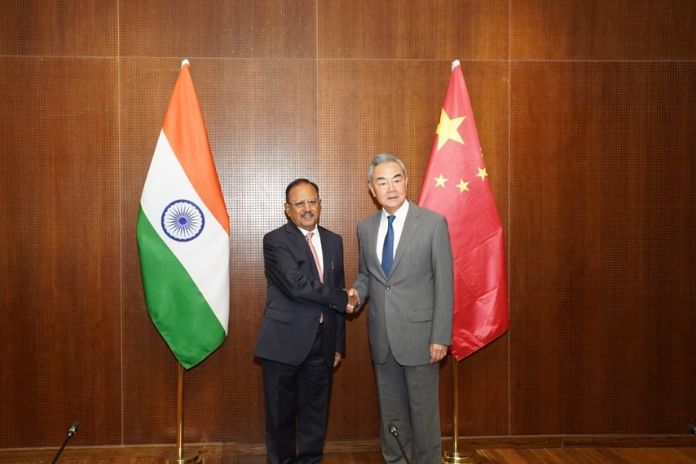
China’s Foreign Minister Wang Yi has called on India and China to speed up the revival of stalled dialogue mechanisms, according to the Chinese readout of his talks with National Security Adviser Ajit Doval in New Delhi.
The meeting took place on the sidelines of a BRICS National Security Advisers’ gathering and reflected the latest attempt by both sides to steady ties that have remained under strain since the border standoff began in 2020.
The Chinese account said Wang described India as an important neighbour of China and stressed that both countries should handle differences through dialogue rather than confrontation. It also said the two sides should work to restore working-level channels that have been inactive or slowed down in recent years.
These mechanisms are important because they help both governments manage sensitive issues, including border talks, trade concerns and diplomatic coordination. Without regular communication, even small disagreements can quickly become larger political problems.
India’s position on the meeting was more cautious but also pointed to a gradual improvement in ties. The Indian side said the discussion covered bilateral relations and border-related issues, with both officials reviewing steps needed to maintain peace and stability.
The longer Chinese readout went beyond the shorter Indian summary by highlighting a wider agenda. It referred to cooperation in trade, finance, law enforcement, and media exchanges, suggesting that Beijing wants the relationship to move forward on multiple fronts, not just on the border question.
The message from Beijing was clear: China wants a structured thaw in relations. It is encouraging both sides to restore the channels that once helped manage tensions and build limited trust, even if the core boundary dispute remains unresolved.
For India, the challenge is to keep diplomatic engagement open without lowering its position on border security and national interests. That balance has shaped the relationship for years and is likely to remain central as both countries continue their cautious outreach.
The Doval-Wang meeting comes at a time when India-China ties are showing signs of limited normalization, but deep mistrust continues to define the relationship. Any progress in dialogue mechanisms will matter not only for border management but also for broader regional stability.
At the same time, both countries have strong reasons to avoid a prolonged freeze. As two major Asian powers with deep economic and strategic interests, even a limited diplomatic reset can help reduce friction and create space for practical cooperation.
For now, Wang’s remarks suggest that China wants the process of rebuilding ties to move faster. Whether that leads to meaningful progress will depend on how both sides handle the border issue and whether they can revive the channels that have long helped prevent a complete breakdown in communication.