Iran has confirmed that no date has been set for new direct talks with the United States, while insisting that the Strait of Hormuz will stay closed to foreign shipping linked to Washington, Israel, and their allies. The move underscores deepening deadlock in diplomacy and growing risks to global oil trade and regional stability in the Persian Gulf.
No timeline for US–Iran negotiations
Iranian Deputy Foreign Minister Saeed Khatibzadeh said there is no fixed schedule for the next round of talks and that Iran will not set a date until the US offers a clearer framework and tone at the negotiating table. Tehran accuses Washington of arriving with “maximalist” demands and refusing to ease pressure on Iranian ports and financial channels.
Over the past year, Iran and the US have held several rounds of indirect and direct diplomacy, including meetings mediated by Oman and later face‑to‑face talks in Geneva. Those contacts had briefly revived hopes for a nuclear‑related deal and de‑escalation, but the “Iran war” phase and the US‑led blockade of Iranian ports have halted progress. With no agreed framework or timeline, both sides now appear to be using silence and pressure as bargaining tools.
Strait of Hormuz remains shut
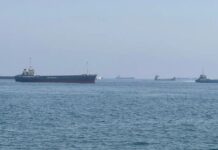
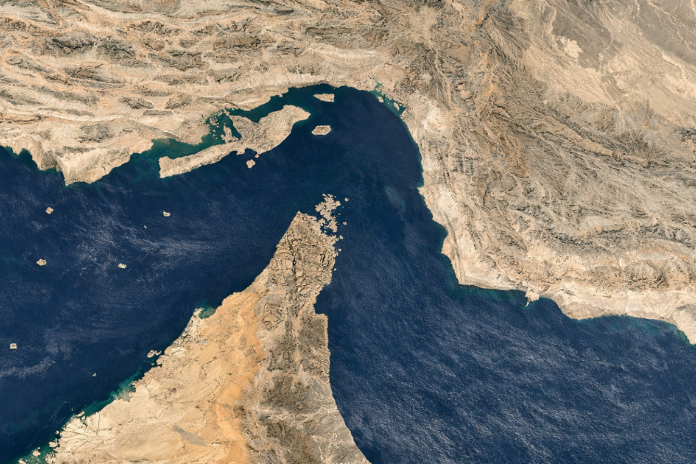
At the same time, Iran’s Islamic Revolutionary Guard Corps (IRGC) has declared that the Strait of Hormuz will remain closed to vessels traveling to and from the United States, Israel, and their allies. Iranian forces say they are enforcing the closure to match what Tehran calls an “illegal blockade” of its ports by the US and its partners.
The Strait of Hormuz is one of the world’s most critical oil‑shipping chokepoints, with a large share of Middle Eastern crude passing through it daily. By shutting it to certain countries’ traffic, Iran is directly targeting global energy flows, forcing many commercial ships to reroute, delay, or suspend voyages. This has pushed up insurance costs, raised concerns about fuel‑supply security, and added fresh volatility to oil prices.
Legal and economic implications
Iran’s closure of the Strait of Hormuz runs counter to the UN Convention on the Law of the Sea, which guarantees the right of innocent passage through international straits. Gulf states, Europe, and major Asian importers have urged Tehran to reopen the waterway, warning that unilateral restrictions could set a dangerous precedent for global trade.
For Iran, the economic impact is twofold: while the Strait‑closure pressures foreign shippers and oil markets, it also hits Iran’s own energy exports and related revenues. The US‑led port blockade has already squeezed Iranian oil sales, and the closing of the Strait only deepens the squeeze on both sides.
Diplomacy hanging in the balance
Iran is using control of the Strait as a leverage tool, explicitly linking its reopening to the lifting of the US blockade on Iranian ports and, by implication, to a broader political and military de‑escalation. Tehran’s position is that Washington must first de‑escalate on the ground before any meaningful talks can resume.
The US and its allies reject this linkage, arguing that Iran’s threats to global shipping and its military posture are themselves escalatory acts. Washington insists that Iran must first show restraint on the Strait and regional operations before any serious negotiation can move forward. This “chicken‑and‑egg” logic is keeping both sides at a standstill.
European and Asian powers are increasingly worried that the impasse could trigger a spiral of miscalculation or open conflict. Some governments have quietly urged discreet shuttle diplomacy and third‑party mediation, but so far no new talks have been announced.
What this means for the region and markets
For the Persian Gulf, the combination of closed Strait access, US port blockades, and no scheduled US–Iran talks means a prolonged phase of uncertainty. The risk of incidents at sea, accidental clashes, or targeted attacks on ships remains high, especially around key shipping lanes and Iranian and Gulf‑Arab ports.
For global markets, the situation feeds volatility in oil, shipping insurance, and freight rates. Import‑dependent economies in Asia and Europe are monitoring the Strait closely, while energy‑rich Gulf states are quietly preparing contingency plans for rerouting and storage.
Looking ahead
With no agreed framework and no date set for new US–Iran talks, the standoff around the Strait of Hormuz is likely to persist in the short term. Iran’s mix of military signaling and diplomatic silence suggests it wants to keep pressure high, while the US appears focused on maintaining its port blockade and regional presence.
How that pressure is managed—through diplomacy, mediation, or further escalation—will shape not only the future of US–Iran relations but also the stability of one of the world’s most vital oil‑shipping corridors.