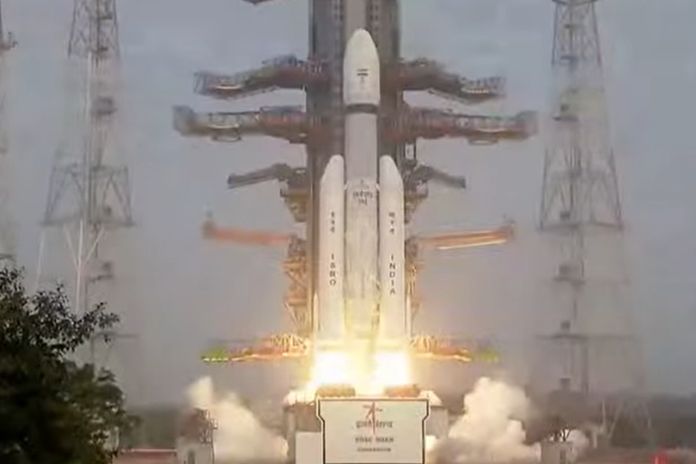
ISRO has etched another success story with the LVM3-M6 mission, flawlessly deploying the BlueBird Block-2 satellite into orbit. This launch sets a new benchmark for payload capacity and reinforces India’s prowess in commercial space ventures.
Mission Highlights
The LVM3-M6 rocket roared to life from Sriharikota’s second launch pad on December 23, 2025, carrying the 6,100 kg BlueBird Block-2 spacecraft. In just 15 minutes, it achieved precise insertion into a 520 km Low Earth Orbit at 53-degree inclination. This marks the sixth operational flight of LVM3, handled through NewSpace India Ltd (NSIL) in partnership with US firm AST SpaceMobile.
About BlueBird Block-2 Satellite
BlueBird Block-2 is a game-changer in satellite tech, boasting a massive 223 square meter phased array antenna. It aims to beam direct 4G/5G broadband to everyday mobile phones, bridging connectivity gaps in remote areas worldwide. As LVM3’s heaviest payload to date, it underscores the rocket’s reliability for large-scale communication satellites. Post-deployment, the satellite will undergo testing before full operations.
LVM3 Rocket Capabilities
Known as India’s heavy-lift workhorse, LVM3 stands 43.5 meters tall with a 640-tonne liftoff mass. Its design includes two S200 solid boosters, an L110 liquid core, and a C25 cryogenic upper stage. Past feats include Chandrayaan missions and OneWeb constellations, with an impeccable success rate.
Strategic Importance
This BlueBird Block-2 mission boosts India’s share in the global space market, proving LVM3’s edge for high-value commercial jobs. It paves the way for more NSIL-led launches, fueling economic growth through space tech exports. For AST SpaceMobile, it’s a step toward seamless global mobile coverage from space.