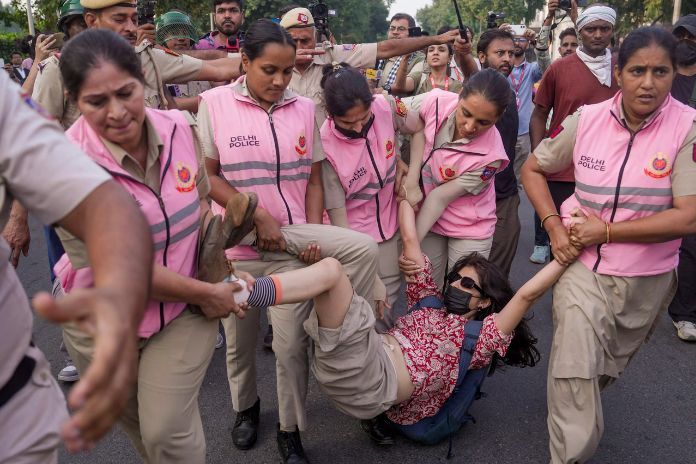
The United Nations Human Rights Office has expressed concern over reports of mass detentions in Delhi during large-scale protests, urging Indian authorities to immediately and unconditionally release anyone held arbitrarily. The statement came amid reports that demonstrators, political leaders, civil-society members, lawyers, and journalists were detained before and during Saturday’s protest.telegraphindia+1
What the UN said
UN Human Rights spokesperson Thameen Al-Kheetan said the office was concerned by reports of mass detentions linked to the Delhi demonstrations. The UN called on authorities to respect the right to peaceful assembly and to ensure that any restrictions on protest were necessary and proportionate.
The UN also urged law-enforcement agencies to show “utmost restraint” while dealing with peaceful protesters. It said India should uphold its democratic traditions and human-rights obligations, and called for meaningful dialogue to address public concerns.
“All those arbitrarily detained must be immediately and unconditionally released,” the UN statement said, according to reports.
Protest context
The detentions were reported during protests in Delhi against the Special Intensive Revision (SIR) of electoral rolls and demands for the resignation of Chief Election Commissioner Gyanesh Kumar. Several reports said more than 4,000 people were detained during the crackdown, while some accounts put the number higher.
The protests were organised by the Cockroach Janta Party (CJP). Reports said the party planned to resume its march towards Jantar Mantar after the detentions.
India’s response
India rejected the UN’s remarks, saying they were misplaced and amounted to unwarranted interference in the country’s internal affairs. India’s Permanent Mission in Geneva responded after the UN human rights office raised concerns over the detentions.
The government’s position is that law and order matters fall within India’s domestic jurisdiction and that authorities are acting in accordance with the law.
Why it matters
The exchange has turned the Delhi protest detentions into an international human-rights issue. The UN’s intervention highlights concerns over freedom of expression, peaceful assembly, and the treatment of journalists and civil-society members during public demonstrations.
For India, the development is significant because it comes at a time when the government is facing questions over the handling of protests and the scale of preventive detentions. The UN has not imposed any action, but its public statement increases diplomatic and media scrutiny of the issue.
What happens next
The situation remains fluid. Protest organisers have indicated that demonstrations may continue, while authorities are expected to maintain security arrangements in the capital. Any further detentions, releases, or official statements from Delhi Police and the Ministry of External Affairs will be closely watched.
The key issue now is whether those detained are released promptly and whether future protests proceed without restrictions that human-rights bodies consider excessive.