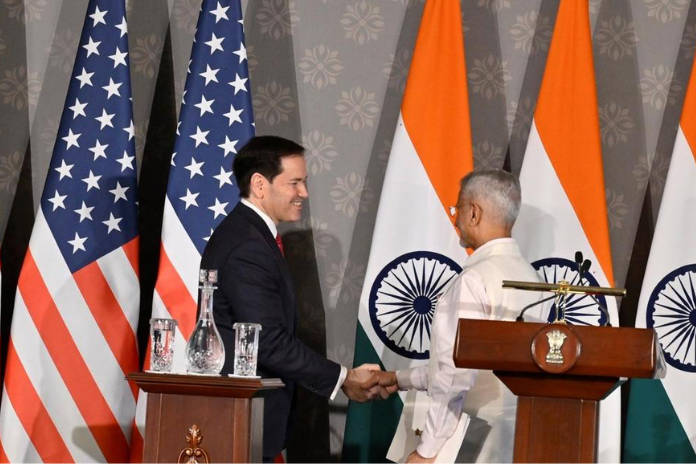
External Affairs Minister S. Jaishankar held talks with US Secretary of State Marco Rubio and set out India’s position on key issues linked to West Asia, trade, and maritime security.
Jaishankar’s message was clear. India wants dialogue, open sea lanes, and uninterrupted maritime trade. He also stressed the need for regional stability and said trade should not be turned into a weapon.
The talks came at a time when tensions in West Asia remain high. Shipping routes in the region are vital for India because they affect trade, energy supplies, and overall economic stability.
Rubio also commented on the situation. He said there were signs of progress in efforts related to Iran and suggested that an announcement could come later if a deal is reached. He linked such progress to the wider effort to end the conflict in West Asia.
For India, the priority is practical and direct. Safe maritime routes help keep imports moving and protect business activity across the region. Any disruption in these waters can raise costs and create uncertainty for shipping and energy markets.
The meeting also reflected the broader India-US partnership. Both sides discussed issues beyond West Asia, including trade and regional security. The talks showed that New Delhi and Washington continue to coordinate on matters that affect the global economy.
Jaishankar’s stand fits India’s long-held position. New Delhi prefers diplomacy over conflict and wants shipping lanes to remain open for all countries. That approach is especially important in a region that influences fuel prices, supply chains, and international commerce.
Rubio’s remarks added a diplomatic note to the meeting. While no final outcome was announced, his comments suggested that negotiations involving Iran may be moving forward.
The discussions underline a simple point: maritime freedom and stable diplomacy are closely linked. For India, protecting sea routes is not only a security issue but also an economic necessity.