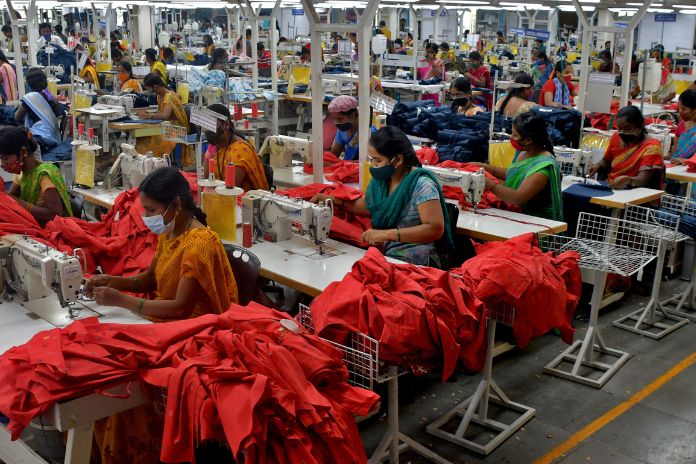
India’s textiles and garment exports recorded a decline in the financial year 2025–26, slipping by 2.2% to about $35.8 billion, according to the Global Trade Research Initiative (GTRI). This marks a slowdown after a stretch of relatively strong growth and highlights the challenges facing one of the country’s largest employment‑intensive export sectors.
What the numbers show
In rupee terms, textile and garment exports also fell by roughly 2.1%, indicating that the drop is not just a result of currency movements but reflects real weakness in demand and export volumes. The decline covers several key segments of the industry, with cotton textiles and ready‑made garments seeing sharper falls than others.
- Cotton textiles exports: down by about 3.9%
- Ready‑made garments exports: down by around 1.4%
- Carpets exports: down by nearly 5.3%
The only brighter sub‑segment was handicrafts, which posted a modest growth of about 1.5%, suggesting that niche, design‑driven products are holding up better than mass‑market apparel and basic fabrics.
Why textiles and garment exports fell
Several factors together explain why textiles and garment exports fell in 2025–26. One major reason is soft global demand, especially in price‑sensitive markets in Europe and North America. Many importing countries have been dealing with elevated inventories built up during earlier years of strong demand, so they are now purchasing less and focusing on clearing stock. This has led to smaller order sizes and more pressure on prices.
At the same time, global competition has intensified. Countries such as Bangladesh, Vietnam, and Turkey have been aggressively capturing market share in apparel and textiles, often offering lower prices, faster delivery, or more favourable trade terms. India’s exporters, many of whom are small and medium units, find it harder to match these conditions without deeper integration into global supply chains and stronger branding.
Another issue is regulatory and trade pressures. Several importing markets have tightened rules on environmental standards, forced‑labour clauses, and sustainability reporting. Indian manufacturers without clear traceability systems or green‑certified inputs face higher compliance costs and a risk of order cancellations or delays.
Structural weaknesses behind the fall
The fall in textiles and garment exports is not just cyclical; it also points to deeper structural weaknesses. For example:
- Fragmented production base: A large share of Indian textile units are small, family‑run workshops with limited capacity to invest in automation or digital workflows.
- Logistics and lead‑time gaps: Port delays, customs bottlenecks, and fragmented domestic transport networks can stretch delivery timelines, making Indian exporters less competitive against integrated hubs in Southeast Asia.
- Limited branding and design strength: Many exporters still rely on low‑cost contract manufacturing, which ties them to tight margins and makes them vulnerable when global brands shift orders elsewhere.
These factors mean that even when the rupee depreciates—making Indian products nominally cheaper—exporters do not always see strong gains in volume because cost advantages are eroded by inefficiencies and compliance burdens.
What the future may look like
For the textiles and garment exports sector to recover from the 2.2% fall in 2025–26, several policy and industry‑level steps may be needed:
- Better integration into global brands’ supply chains, with more focus on design, sustainability certification, and Just‑in‑Time delivery.
- Investment in technology and automation to raise productivity and reduce labour dependence, especially in spinning, weaving, and garment cutting segments.
- Stronger support for logistics and export infrastructure, such as faster port clearances, dedicated export corridors, and digital trade documentation.
- Encouragement of domestic branding and e‑commerce exports, so Indian labels can move up the value chain instead of remaining low‑margin suppliers.
If these steps are taken, the short‑term fall in textiles and garment exports can become a turning point towards a more modern, resilient, and higher‑value export base.