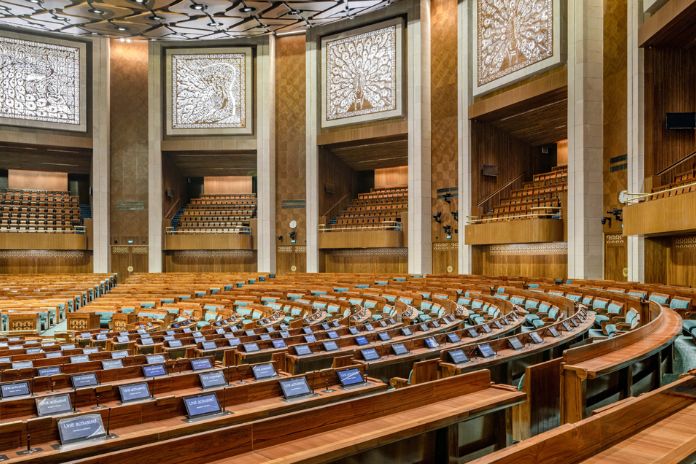
The Indian government has introduced the highly anticipated Delimitation Bill 2026 in Parliament today, April 16, 2026, marking a pivotal moment in electoral reforms. Tabled during a special three-day session, the bill proposes expanding Lok Sabha seats from 550 to 850—815 for states and 35 for Union Territories—using fresh census data. This move, accompanied by the Constitution (131st Amendment) Bill, 2026, and the Union Territories Laws (Amendment) Bill, 2026, aims to realign constituencies based on population changes since the 1971 freeze.
What the Bill Entails
At its core, the Delimitation Bill 2026 replaces the outdated 2002 law to conduct a new delimitation exercise. A Delimitation Commission, headed by a Supreme Court judge or Election Commissioner, will redraw boundaries and allocate seats proportionally. Law Minister Arjun Ram Meghwal presented the primary bills, while Home Minister Amit Shah introduced the UT amendment. The expansion would pave the way for implementing the 33% women’s reservation in Lok Sabha and state assemblies by the 2029 elections, with seats rotating periodically.
This reform addresses decades-old imbalances. India’s population has surged since the last delimitation in 2002, based on 1971 census figures, leading to skewed representation. Northern states with higher growth rates stand to gain more seats, while southern states, which prioritized family planning, face dilution of influence.
Political Firestorm Unfolds
The special Parliament session, kicking off today, is set to be dominated by heated debates on the Delimitation Bill 2026. Opposition parties, led by Congress, have vowed fierce resistance. They argue the bill entrenches northern dominance, punishes southern states for effective population control, and lacks democratic oversight with a government-nominated commission.
Southern leaders from Tamil Nadu, Kerala, and Karnataka have voiced strong protests, warning of federal imbalance. Critics label it politically motivated, potentially reshaping electoral math ahead of future polls. Videos and reports highlight rallies and opposition strategies to stall the legislation.
Broader Implications
If passed, the bill could transform India’s political landscape by 2029. Proponents say it ensures fairer representation reflecting current demographics. Detractors fear it centralizes power and ignores regional disparities. The women’s quota activation adds a progressive layer, but its rotational nature raises implementation questions.
As Parliament deliberates, all eyes are on cross-party negotiations. The Delimitation Bill 2026isn’t just about numbers—it’s a battle over equity, federalism, and the future of democracy in a diverse nation.