Home International Thailand-Cambodia Border Clashes Escalate: Airstrikes and Displacement Rock Disputed Frontier
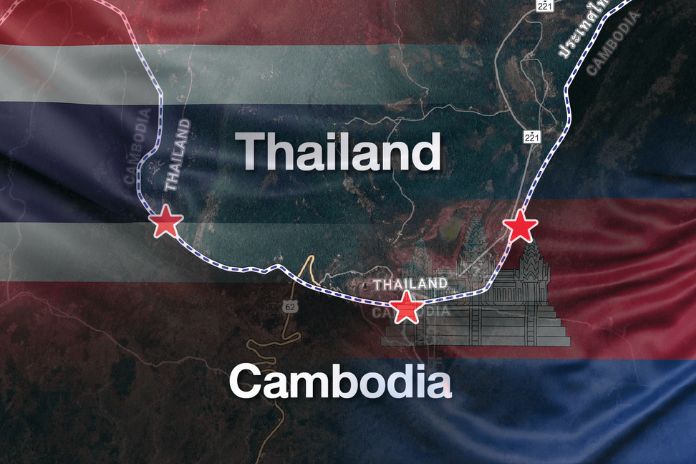
Thailand and Cambodia are locked in intense border clashes as of December 2025, marking the worst violence in over a decade around their disputed frontier. The fighting, centered near the ancient Preah Vihear temple, involves airstrikes, artillery duels, and ground skirmishes, with both sides blaming each other for violating earlier ceasefire arrangements. The situation has raised serious concerns about regional stability and the risk of a wider conflict in Southeast Asia.
The roots of the crisis lie in a long-running border dispute around Preah Vihear, an 11th‑century Khmer temple awarded to Cambodia by the International Court of Justice in 1962. While the temple is internationally recognized as Cambodian territory and a UNESCO World Heritage site, the surrounding border area was never fully demarcated, leaving several square kilometers contested. This ambiguity has repeatedly been exploited by nationalist forces in both countries, turning the frontier into a symbolic battleground for sovereignty and pride.
Tensions that had simmered for years flared again in 2025, with clashes first reported around mid‑year and later interrupted by a foreign‑mediated ceasefire. In early December, the conflict escalated sharply when Thailand launched airstrikes on Cambodian positions along the disputed border, prompting heavy artillery exchanges. Both governments report casualties among soldiers and civilians, while accusing each other of firing first and targeting populated areas near the frontier.
The humanitarian impact is severe, with hundreds of thousands of people displaced from their homes in border provinces on both sides. Many families have fled under shellfire, seeking safety in overcrowded temporary camps and public buildings further inland. Aid organizations and local authorities warn that supplies of food, clean water, and medical care are under pressure, and that prolonged fighting could trigger a deeper humanitarian crisis among already vulnerable communities.
The international response has focused on calls for de‑escalation and a return to negotiations. Key regional actors and global powers urge both Bangkok and Phnom Penh to respect previous ceasefire commitments and protect civilians, while diplomatic efforts aim to revive talks on joint border demarcation and management of the temple surroundings. However, strong nationalist sentiment and domestic political pressures in both countries make compromise difficult, raising doubts about how quickly a durable settlement can be reached and whether the guns will fall silent in the near term.