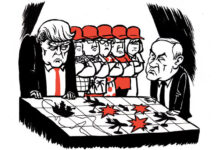
The 2025 BRICS Summit, hosted in Rio de Janeiro, unfolded under a cloud of geopolitical tension as leaders of the expanded bloc gathered to reaffirm their commitment to multilateralism and economic cooperation. The event, which aimed to project unity among the Global South, was sharply overshadowed by US President Donald Trump’s bold warning: any nation supporting BRICS-aligned policies that go against American interests would face an additional 10% import tariff.
This statement, made public through Trump’s social media channels, quickly became the dominant conversation both inside and outside the summit halls. Trump’s administration had earlier given countries until July 9 to finalize trade deals with the US. However, officials have now confirmed that the new tariffs will take effect from August 1, with formal notices being dispatched to more than a dozen countries this week. These letters, described by Treasury Secretary Scott Bessent as “firm but open to negotiation,” have intensified global uncertainty around trade.
Despite Trump’s looming tariffs, the BRICS bloc — comprising Brazil, Russia, India, China, South Africa, Egypt, Ethiopia, Indonesia, Iran, Saudi Arabia, and the UAE — reaffirmed its vision for a more balanced world order. The group represents nearly half of the world’s population and a significant share of global economic output. While the summit marked a historic expansion of BRICS, it also revealed key fractures. Chinese President Xi Jinping skipped the event for the first time since 2012, delegating Premier Li Qiang, while Russian President Vladimir Putin also remained absent due to an ICC arrest warrant and Brazil’s obligations under the Rome Statute.
Nevertheless, BRICS leaders doubled down on their opposition to protectionist policies. In a joint statement, the bloc’s finance ministers called out the US’s tariff measures as harmful and destabilizing for global trade. Discussions also touched upon broader reforms, including restructuring the International Monetary Fund, addressing currency imbalances, regulating artificial intelligence, and tackling climate change through collective South-South action.
Internally, the group wrestled with disagreements, particularly regarding the war in Gaza and how to handle rising tensions in the Middle East. However, the shared goal of amplifying the voice of the Global South kept discussions focused. Commentators noted that while the BRICS bloc may not yet be a tightly unified geopolitical force, its growing economic influence and coordinated response to Western trade dominance mark a shift in global dynamics.
In the background of the summit, analysts raised practical concerns about Trump’s push to isolate BRICS. Trade experts pointed out that weaning economies off Chinese manufacturing and mineral exports is far from easy. Sectors like electric vehicles, batteries, and rare earths remain deeply reliant on China. As such, Trump’s tariff threats, while aggressive, may have limited long-term leverage in sectors where alternatives simply do not exist.
As the Rio summit came to a close, the world was left watching the tug-of-war between a growing alliance of developing economies and a protectionist America. BRICS continues to call for a multipolar, inclusive world order — but the test will be whether its members can hold a unified stance under external pressure, especially from the White House.