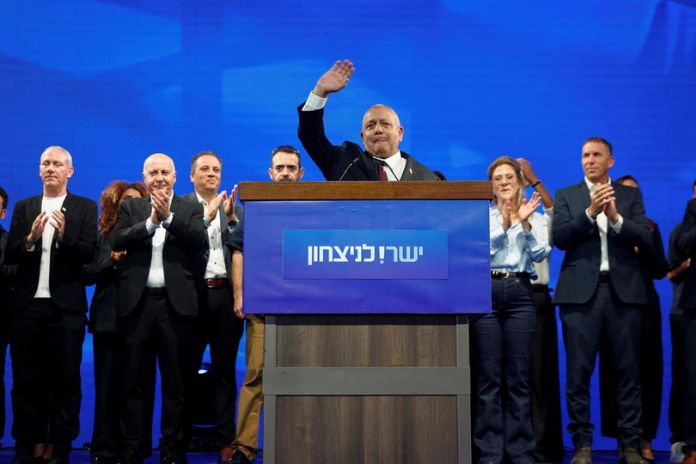
Israeli President Isaac Herzog has asked former military chief and opposition leader Gadi Eisenkot to try to form the country’s next government. The decision gives Eisenkot, one of Prime Minister Benjamin Netanyahu’s strongest rivals, the first opportunity to build a coalition after Israel’s October 27 election ended without a clear majority.
Eisenkot now has 28 days to secure the support of at least 61 members of the 120-seat Knesset. If he cannot form a government, Herzog may grant a 14-day extension before considering another candidate.
Why Eisenkot received the mandate
Netanyahu’s religious-nationalist bloc remains the largest group in parliament with 53 seats, but it fell short of the 61-seat majority needed to govern. Eisenkot’s opposition bloc holds 48 seats, while Arab-led parties Ra’am and the Joint List together won 19 seats.
Both Arab parties recommended Eisenkot for the role, giving him backing from 67 lawmakers—more than Netanyahu’s 46. That support made Eisenkot the candidate with the strongest chance of assembling a government.
Arab support creates a dilemma
Although Arab parties helped Eisenkot receive the mandate, he has said he will not bring them into a formal coalition. Instead, he may seek their support from outside the government, allowing them to vote with his bloc without joining it.
This approach could give Eisenkot a working majority, but it faces resistance within his own camp. Some right-wing allies, including Avigdor Lieberman, have said they will not sit in a government that depends on Arab votes.
Eisenkot has also set conditions for potential partners. He has said any government must recognize Israel as a Jewish and democratic state, support Israel’s declaration of independence, require military service for all, and recognize Hamas as a terrorist organization that must be dismantled.
Netanyahu still in office
Netanyahu remains prime minister and leads a caretaker government while coalition talks continue. He has called for a broad national government led by his Likud party and invited Eisenkot and other Zionist parties to join.
A unity government between Eisenkot’s bloc and Netanyahu’s Likud could reach a majority, but Eisenkot has said he would consider such an arrangement only if he served as prime minister. That makes an agreement difficult, given that Netanyahu’s bloc is still the largest in parliament.
What could happen next
Eisenkot has several possible routes to power:
- Form a minority government supported from outside by Ra’am and the Joint List.
- Negotiate with ultra-Orthodox parties, despite past disagreements over military exemptions.
- Pursue a unity government with Netanyahu, though this appears politically difficult.
If Eisenkot fails within the allowed time, President Herzog is expected to give Netanyahu the next chance to form a government. If neither leader succeeds, Israel could face another election.
Why this matters
The standoff highlights Israel’s deep political divide after an election that left neither major bloc with a clear path to power. Arab-led parties have emerged as key kingmakers after winning a record 19 seats, while Eisenkot must balance their support with the demands of his own coalition partners.
For now, Eisenkot has the first chance to lead coalition talks. Whether he can turn a 67-seat endorsement into a stable government will determine whether Netanyahu’s long tenure continues or a new political era begins.