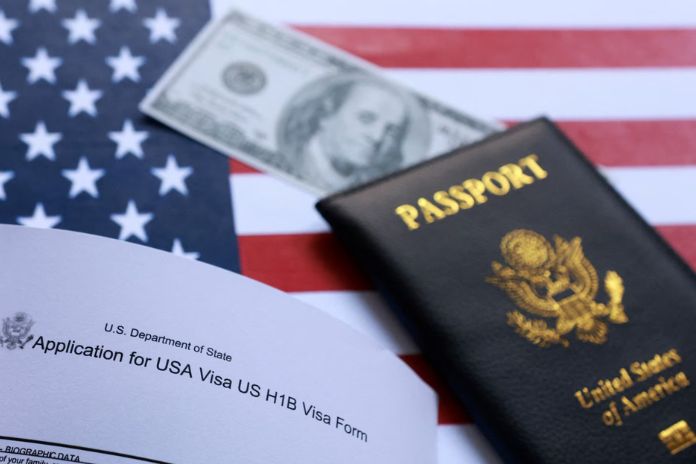
US President Donald Trump has extended a controversial rule that imposes a $100,000 fee on certain new H-1B visa petitions. The requirement, which was set to expire this month, will now remain in force until September 21, 2027, even as courts examine whether the charge is legal.
The move has drawn sharp reactions from India’s political leaders and the IT industry, given that Indian nationals account for the largest share of approved H-1B beneficiaries. For thousands of Indian engineers, technicians, and other skilled workers eyeing US jobs, the extension means higher costs, more uncertainty, and a longer wait for clarity from the courts.
What the new extension says
Under the latest presidential order, the $100,000 payment applies mainly to fresh H-1B petitions for specialty-occupation workers who are outside the United States and seeking entry after 12.01 am ET on September 21, 2026.
Not every H-1B case is affected. Key exemptions include:
- Existing H-1B holders renewing or extending their status.
- Many workers changing status from student (F-1) visas inside the US.
- Petitions where the Homeland Security Secretary grants a national-interest waiver for specific workers, companies, or sectors.
The White House has described the fee as part of a broader effort to curb alleged misuse of the H-1B programme and to prioritise American workers, especially in sectors facing layoffs.
Why Indian workers are most affected
Indians make up roughly seven out of ten approved H-1B beneficiaries, making them the single largest nationality group in the programme. That is why any increase in cost or restriction on new petitions hits Indian professionals harder than others.
Senior Congress leader Pawan Khera has warned that the extended fee could adversely affect Indian IT professionalsand disrupt the talent pipeline for students and early-career workers aiming for US opportunities. Industry observers say US employers may think twice before sponsoring new hires if they must pay an extra six-figure charge on top of existing filing fees.
For many Indian families, the H-1B route has long been a key path to high-skilled jobs in technology, engineering, finance, and research. A sustained $100,000 barrier could push some companies to look for local US hires or shift work to other countries, reducing fresh openings for Indian talent.
Legal battle over the fee
The fee is not uncontested. In June 2026, a federal judge in Massachusetts ruled that the $100,000 charge was an unlawful tax imposed without proper legal authority. The Trump administration is appealing that decision, and a Boston-based appeals court is now reviewing the case.
Separately, the US Chamber of Commerce and other business groups have filed their own challenge, arguing that the fee exceeds the administration’s powers and harms American companies that rely on global talent. Until these cases are fully resolved, the fee remains officially in effect under the latest extension.
What could happen next
Three scenarios are now in play:
- Fee stays till 2027: If courts do not block it, employers must continue paying $100,000 for covered new H-1B petitions until September 2027.
- Fee struck down on appeal: If higher courts uphold the June 2026 ruling, the requirement could be removed before 2027, potentially with refunds or adjustments for affected petitions.
- More fees on the way: Reports suggest the administration is also considering a separate charge of around $103,000 for cap-subject H-1B petitions, which could add further cost pressure if implemented.
In parallel, the White House retains discretion to issue national-interest waivers for specific industries or critical projects, which could soften the blow for some employers and workers.
Until the courts give a final answer, the working assumption for employers and applicants should be that the $100,000 H-1B visa fee is active until September 2027.