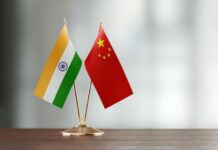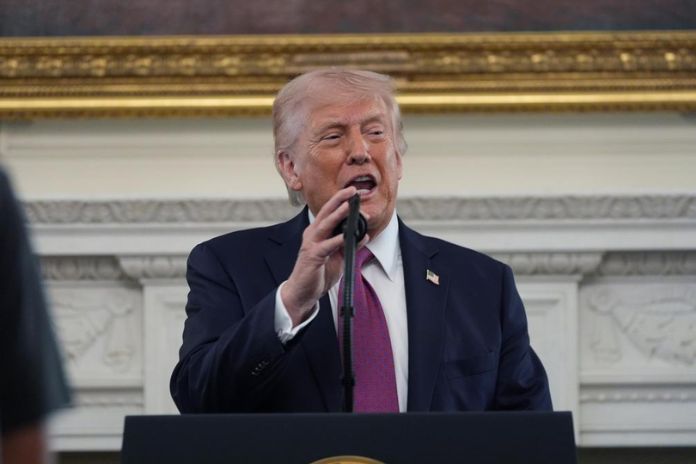
President Donald Trump has signed the Lindsey O. Graham Sanctioning Russia and Iran Act of 2026 into law, a tough new U.S. sanctions package aimed at cutting Moscow’s war revenues from oil and gas. The law gives the American president the power to impose additional tariffs of up to 100% on countries that remain among the five largest buyers of Russian crude oil or natural gas — a list that includes India.
The move puts India’s heavy reliance on discounted Russian crude in the spotlight and raises fresh questions about the future of India–U.S. trade ties.
What the US Russia sanctions law does
The legislation, passed by both the U.S. Senate and House of Representatives, has two main thrusts:
- Tighter sanctions on Russia and Iran targeting officials, banks and entities that help fund their military and nuclear programmes.
- Tariff powers against big buyers of Russian energy, allowing the U.S. president to raise duties by up to 100% ad valorem on all goods imported from any country that:
- Was among the top five importers of Russian-origin crude oil or natural gas in the past 12 months, and
- Knowingly makes new purchases of such energy after the law comes into force.
Reports identify China, India, Slovakia, Hungary and Azerbaijan as likely targets under this provision.
Importantly, the law does not automatically impose any tariff on India. It only creates a legal option for the White House to act, and to decide the rate, products and timing.
Why India is in the frame
India is the world’s third-largest oil consumer and depends on imports for over 88% of its crude needs. Russian crude alone accounts for around 30–40% of India’s total oil imports in 2025–26, making New Delhi the second-biggest buyer of Russian crude after China.
Indian refiners have been buying heavily from Russia since 2022, attracted by steep discounts after Western sanctions redirected Moscow’s oil flows to Asia. This has helped keep fuel prices and inflation in check but has also drawn repeated scrutiny from Washington.
India’s response: “Will protect trade and economic interests”
New Delhi has reacted quickly and firmly to the new US Russia sanctions law:
- The Ministry of External Affairs (MEA) said India is “closely monitoring” the legislation and has conveyed to Washington that such tariffs could affect bilateral ties and global energy markets.
- The government stressed it remains committed to ensuring energy security for 1.4 billion people through diversified sourcing and decisions based on “evolving market dynamics”.
- The MEA added that India will take “all necessary measures” to safeguard its trade and economic interests if punitive tariffs are imposed.
Officials have also underlined that India’s inclusion in the bill does not mean a 100% tariff has been imposed; it only opens the door for possible future action by the U.S. president.
What could happen next?
If the Trump administration decides to use this authority:
- Indian exports to the U.S. — including pharmaceuticals, textiles, engineering goods and possibly some services-linked goods — could face much higher duties, potentially up to 100% on top of existing tariffs.
- That would make many Indian products less competitive in the American market and could hurt sectors that employ millions.
- At the same time, the White House has wide discretion: it can choose not to act, target only specific products, grant exemptions, or phase in measures gradually.
The timing is sensitive, as India and the U.S. have been negotiating a bilateral trade deal for months. Any harsh use of the tariff tool could complicate those talks and strain the broader strategic partnership.
Bottom line
The US Russia sanctions law gives President Trump a powerful new lever to pressure countries buying Russian oil, with India squarely in view. For now, New Delhi’s message is clear: it will prioritise energy security, keep diversifying supplies, and defend its trade and economic interests if Washington chooses to deploy the 100% tariff option.