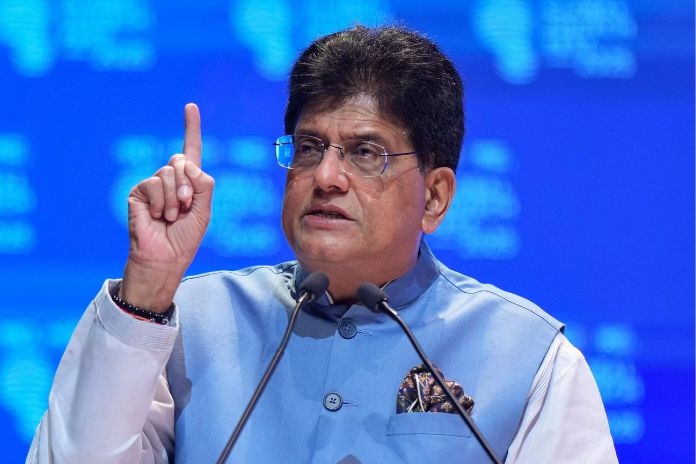
India is negotiating free trade agreements (FTAs) with eight to nine additional country groups and individual nations, Commerce and Industry Minister Piyush Goyal said during his visit to Japan.
The proposed agreements could give Indian businesses access to economies representing nearly US$15 trillion in additional gross domestic product. Goyal said India’s wider FTA strategy could eventually cover about 75% of global trade.
The minister was speaking while leading a business delegation of more than 200 representatives to Japan. The visit focused on strengthening trade, investment and economic cooperation between the two countries.
Nine agreements signed in four years
Goyal said India had signed nine trade agreements during the past four years. These pacts cover economies with a combined GDP of around US$60 trillion, including several developed countries.
If the ongoing negotiations are completed, the total economic coverage of India’s trade agreements could rise to approximately US$75 trillion. The government believes this will provide Indian exporters with greater access to international markets and create new opportunities for investment.
However, economic coverage and trade coverage are not the same. The final benefits will depend on the terms of each agreement, including tariff concessions, product standards, rules of origin and implementation timelines.
Boost to global value chains
India wants to position itself as a reliable and trusted partner in global value chains. Global value chains involve the production of goods across several countries, with different stages such as design, manufacturing, assembly and distribution taking place in different locations.
By signing more FTAs, India hopes to become a more attractive destination for companies looking to diversify their supply chains. Easier access to overseas markets could encourage multinational companies to invest in manufacturing and sourcing operations in India.
Indian industries such as textiles, pharmaceuticals, engineering goods, electronics, automobiles and gems and jewellery could benefit from improved market access. Greater integration with global supply chains may also help Indian companies increase exports and adopt international production standards.
Challenges remain
Signing an FTA does not automatically lead to higher exports. Indian businesses must also be competitive in terms of price, quality, technology, delivery timelines and compliance with foreign regulations.
Small and medium-sized enterprises may require support to understand FTA rules and claim the benefits available under these agreements. Concerns over imports and the impact on sensitive domestic industries will also need to be addressed during negotiations.
The government may therefore use phased tariff reductions, safeguards and sector-specific protections to balance export opportunities with domestic economic concerns.
India’s trade strategy
India’s expanding FTA network is part of a broader effort to strengthen its role in international trade. The government is seeking wider market access while attracting investment and connecting Indian businesses with global production networks.
If the negotiations are successfully concluded and businesses are able to use the agreements effectively, the policy could support export growth and help India establish itself as a trusted participant in global value chains.