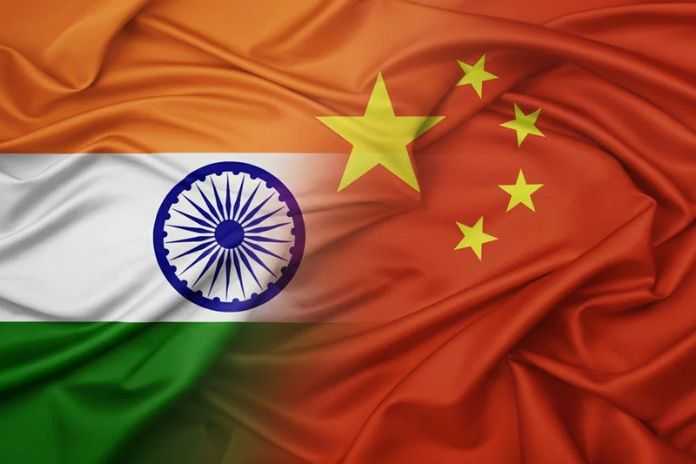
As India and China prepare for their 25th round of Special Representative talks on the boundary in Beijing on 25 August 2026, the message from both capitals is cautious optimism. National Security Advisor Ajit Doval and Chinese Foreign Minister Wang Yi will review bilateral ties ahead of Chinese President Xi Jinping’s expected visit to India for the BRICS Summit in September—his first in seven years.
In this context, Hu Shisheng, a leading Chinese strategic affairs scholar on South Asia and head of the Asia Institute at the China Institutes of Contemporary International Relations (CICIR), has offered a clear reading of where the relationship stands.
“Structural differences have not disappeared”
Hu told The Hindu that while both sides are working to stabilise ties, the deeper “structural differences” in the India-China relationship have not gone away. These include the unresolved boundary, heavy military deployments along the Line of Actual Control (LAC), a lopsided trade pattern, and China’s close ties with Pakistan.
Instead of a dramatic breakthrough on the border, Hu expects the immediate focus to be on “institutionalising stability”. That means putting in place stronger mechanisms to prevent misunderstandings and miscalculations, improving military and diplomatic communications, and turning last year’s “early harvest” idea into a concrete, working process.
From crisis management to rules-based stability
Last year, during the 24th round of talks, India and China agreed to set up an Expert Group under the Working Mechanism for Consultation and Coordination (WMCC) to explore “early harvest” options for boundary delimitation. Since then, two WMCC meetings have discussed delimitation in procedural terms, but no specific sectoral agreement has been publicly announced.
Hu sees the next practical step as operationalising the Expert Group: agreeing on its objectives, timeline, and criteria for identifying relatively less contentious areas along the LAC. The goal is not an immediate solution to the boundary question, but a steady, rules-based process that reduces the risk of incidents.
For both Special Representatives, the bigger challenge is to craft a sustainable modus vivendi—a way of managing differences, avoiding confrontation, and still allowing space for cooperation where interests align.
BRICS Summit adds urgency
The timing of Doval’s visit, just weeks before the BRICS Summit in New Delhi on 12 September, adds strategic weight to these talks. Xi is expected to attend, opening the possibility of leader-level engagement.
Hu says both sides have a strong incentive to keep the border calm and build a favourable political atmosphere before the summit. Key priorities for the border talks include:
- Preventing any surprise incidents along the LAC before September
- Creating the right political climate for potential leader-level meetings
- Coordinating the transition of the BRICS agenda from India to China, which will take over the chair next year
At the strategic level, Hu describes Doval’s visit as an effort to “remove potential hurdles” ahead of BRICS and lay the groundwork for possible engagements between Prime Minister Narendra Modi and President Xi.
Competitive coexistence, not strategic reset
Hu characterises the current phase as “strategic risk management” rather than a strategic realignment. Recent strains in India-U.S. ties may push New Delhi to keep more options open, while a relative stabilisation in China-U.S. relations eases some external pressure on Beijing.
Even so, the core structural differences between India and China remain. What is emerging, Hu argues, is a more stable form of “competitive coexistence”: maintaining border peace, restoring practical cooperation, and enhancing coordination through BRICS and the Global South—without ignoring the reality of ongoing strategic competition.
For policymakers and analysts tracking India-China relations, the takeaway is clear: the border talks in 2026 are less about a grand settlement and more about building a durable, institutional framework for stability in a relationship defined by managed rivalry.