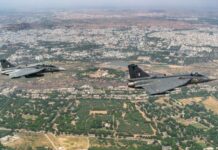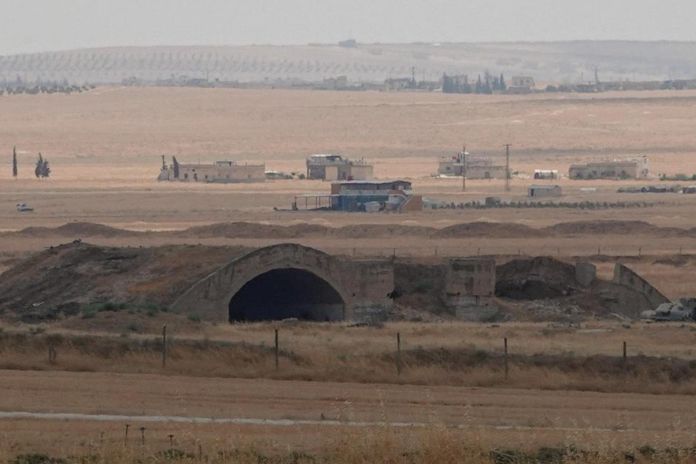
Israeli warplanes struck the Abu al-Duhur military air base in Syria’s Idlib province early on August 18, 2026, just hours after a Turkish delegation inspected the site to review ongoing rehabilitation work, Syrian officials said.
What happened at the air base
Syrian state media reported that Israeli aircraft carried out eight airstrikes targeting the runway and storage facilities at the Abu al-Duhur base, causing material damage but no casualties. Local military sources and civilians near the base confirmed the absence of injuries despite significant infrastructure damage.
Turkish delegation visit confirmed
Two Syrian officials, speaking anonymously to The Associated Press, said a Turkish delegation visited the air base on August 17 to assess rehabilitation efforts underway at the long-dormant facility. Their account aligns with earlier reports that Ankara has been exploring options to reactivate the base as part of broader security arrangements in northwestern Syria.
Israel’s rationale and regional message
Although Israel did not officially claim responsibility, Israeli sources indicated the strike aimed to prevent a Turkish military buildup at the site, which Jerusalem views as a potential threat to its northern border. Analysts describe the operation as a clear signal to both Damascus and Ankara: Israel will act to block foreign military entrenchment in Syria, especially projects that could revive Syrian air capabilities or expand Turkish influence.
U.S. condemnation and diplomatic response
The United States sharply condemned the strikes. Tom Barrack, President Trump’s special envoy for Syria and Iraq and U.S. ambassador to Turkey, called the attacks an “unnecessary escalation” that undermines regional stability. Barrack emphasized that the Syrian government under President Ahmad al-Sharaa has not adopted a predatory posture and has repeatedly signaled a preference for de-escalation with Israel.
Washington is now working to establish a deconfliction mechanism among Israel, Turkey, and Syria to prevent future incidents, Barrack said. The U.S. plans to host discussions aimed at encouraging diplomatic engagement over military action, promoting restraint and dialogue as the preferred path forward.
Broader context: pattern of Israeli strikes in Syria
This incident fits a recurring pattern of Israeli airstrikes targeting Syrian airfields and military infrastructure, particularly where foreign forces—such as Iranian-linked militias or Turkish units—are perceived to be gaining operational access. In April 2025, Israel struck the T4 airbase in Homs after Turkey explored establishing an air base and air defenses there, underscoring Jerusalem’s red lines around Turkish military projects inside Syria.
What’s next for Syria, Turkey, and Israel
The Abu al-Duhur strike highlights the fragile security balance in northwestern Syria, where Turkish, Syrian, and Israeli interests increasingly intersect. With the U.S. pushing for a formal deconfliction framework, the coming weeks will test whether diplomatic channels can contain escalation or whether further military incidents will follow.
For now, the damaged runway at Abu al-Duhur stands as a stark reminder of the high stakes involved in Syria’s slow-moving reconstruction—and the external powers determined to shape its outcome.