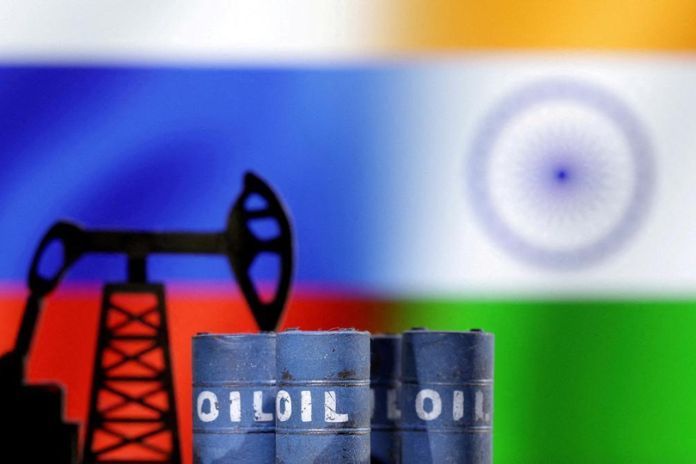
Russia has strengthened its position as India’s largest oil supplier, capturing 38.3% of India’s crude import volume in April 2026. This marks a significant increase from previous months, even as Indian refiners pay a substantially higher premium for the crude.
At the same time, India’s reliance on American oil has dropped to multi-month lows, with U.S. crude accounting for just 2.6% of imports. This shift underscores Delhi’s continued energy strategy: prioritizing volume and supply security over price discounts.
The Numbers Behind the Shift
In April 2026, India imported approximately 1.685 million barrels per day (mbd) from Russia, including shipments from Kazakhstan. This represents 38.3% by volume and roughly 34% by value of total Indian oil imports.
Meanwhile, Saudi Arabia remained India’s second-largest supplier at 15.8%, followed by the UAE at 14.1%, Brazil at 6.9%, and Venezuela at 5.9%. The United States fell to just 115,000 barrels per day, or 2.6% of India’s import mix.
India purchased 60 million barrels of Russian crude for April delivery, following a U.S. waiver that allowed the continued import of Russian energy.
Premium Paid Surges 425%
Perhaps the most striking development is the dramatic increase in the premium Indian buyers pay for Russian crude. In April 2026, refiners paid a $5–$15 per barrel premium over Brent prices, compared to the deep discounts of $8–$12 per barrel below Brent that India enjoyed during 2022–2023.
This represents a 425% jump in the premium relative to previous discount levels. The shift from discounted to premium-priced Russian oil reflects several factors:
- Narrowing Urals discounts as global demand for Russian crude strengthens
- Higher shipping and insurance costs due to geopolitical tensions and route disruptions
- Middle East supply risks, including threats to Strait of Hormuz flows, pushing refiners toward secured Russian volumes
Despite paying more, India increased Russian imports to a nine-month high, demonstrating that supply reliability remains the top priority for Delhi’s energy planners.
Why India Keeps Buying Russian Oil
India’s decision to maintain—and even increase—Russian oil purchases despite higher costs stems from strategic energy security considerations:
- Volume Security: Russian crude ensures steady supply amid Middle East instability
- Refinery Compatibility: Indian refineries are optimized for Russian Urals crude
- Payment Mechanisms: Rupee-rouble trade arrangements ease currency constraints
- Geopolitical Balancing: Delhi maintains energy ties with Moscow while managing Western relations
The United States granted India a 30-day waiver for Russian oil purchases, acknowledging Delhi’s energy needs while maintaining pressure on Moscow.
U.S. Oil Dependence Falls to Multi-Month Lows
India’s dependence on American crude has declined sharply in both volume and value terms. U.S. shipments dropped to 115,000 barrels per day in April, representing just 2.6% of total imports.
This decline reflects India’s preference for geographically closer suppliers and the higher landed cost of U.S. crude compared to Russian and Middle Eastern alternatives. Brazilian and Venezuelan oils have also gained traction as India diversifies beyond traditional suppliers.
What This Means for India’s Energy Future
The April 2026 data confirms that India remains committed to Russian oil despite eroding price advantages. While the 425% premium increase raises concerns about import costs, Delhi appears willing to absorb higher prices to ensure supply continuity.
Total crude imports in April 2026 stood at 85% of February levels, reflecting overall import moderation amid Middle East supply risks. However, Russia’s growing share indicates refiners are prioritizing secured Russian volumes over other sources.
For India’s economy, this translates to higher oil import bills but greater energy security. The government continues balancing fiscal pressures with the need to maintain stable fuel supplies for its 1.4-billion-person economy.
The Bottom Line
Russia’s dominance in India’s oil import basket has never been stronger, with its 38.3% market share in April 2026 setting a new benchmark. Even as the premium paid surges 425%, India shows no signs of reducing Russian dependence.
The message is clear: in energy security, volume trumps price. For now, Moscow remains Delhi’s most critical energy partner, and this relationship shows no signs of weakening despite changing global dynamics.