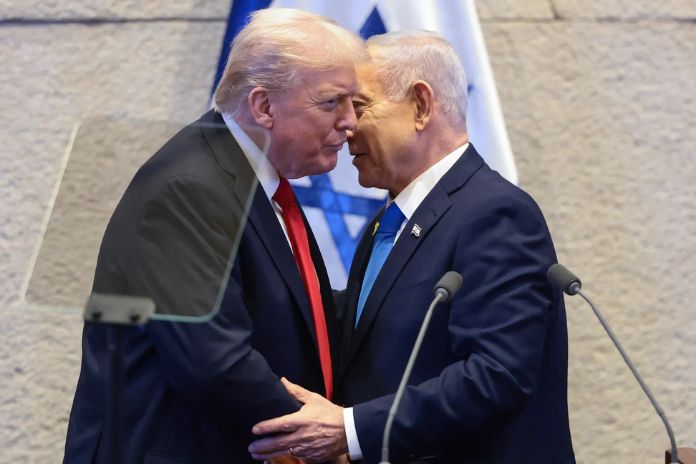
A tense phone call between U.S. President Donald Trump and Israeli Prime Minister Benjamin Netanyahu has poured fresh fuel on fears of a wider war in the Middle East. The conversation focused on how Washington and Jerusalem should respond if diplomacy with Iran breaks down, revealing clear differences in how both leaders view the future of Iran–Israel war tensions.
Diverging Views on Military Action
Reports indicate that Trump told advisors he wants to give diplomacy a few more days before authorizing fresh strikes, emphasising that any new military action would be led by the United States. He reiterated that Israel would “do whatever I want,” underlining Washington’s steering role in any escalation.
By contrast, Netanyahu pushed for quickly resuming offensive operations against Iran if negotiations fail. Israeli officials have long argued that military pressure remains essential to curb Iran’s regional reach and influence. This gap in approach has raised concerns in Washington that a hasty Israeli campaign could trigger uncontrollable escalation.
Iran’s Warning of Wider War
On May 20, Iran warned that if the United States and Israel resume attacks, the war in West Asia would spread far beyond the region. Iranian officials have framed any new military action as a “reckless adventure,” claiming it would embolden anti‑Western forces and invite broader retaliation.
Tehran’s statements echo past threats that it would no longer confine its response to its own territory and could escalate in the Gulf, Red Sea, and other strategic zones. With the Strait of Hormuz already a flashpoint, many analysts worry that any fresh strike could disrupt global energy flows and trigger a wider regional war.
U.S. Preparedness and Diplomatic Pressure
Despite the talk of a brief pause in military action, senior U.S. officials stress that Washington remains “locked and loaded” to strike if Iran does not comply with evolving demands. Reports suggest planning is underway for a possible new operation, with Trump’s national‑security team examining target lists and contingency options.
At the same time, American diplomats are urging other regional actors to support a diplomatic off‑ramp. The goal is to avoid a full‑scale war while keeping pressure on Iran’s military and economic infrastructure. However, the risk remains that any misstep in messaging or timing could be read in Tehran as a sign of weakness—or as a prelude to a devastating attack.
Growing Regional Anxiety
The latest exchange between Trump and Netanyahu has intensified anxiety across the Middle East. Several Gulf states, while wary of Iran, are also concerned about the economic and security costs of a prolonged war. Business leaders, investors, and regional governments are closely monitoring every signal from Washington and Jerusalem, ready to adjust their positions at short notice.
Analysts note that while both the U.S. and Israel want to change Iran’s regional behaviour, the challenge lies in calibrating that pressure without triggering an all‑out conflict. The current Iran–Israel war tensions may yet be contained, but the phone call between the two leaders has made it clear that the clock is ticking for a diplomatic solution.
What Comes Next
If talks fail, the U.S. may decide to hit Iranian targets directly, while Israel may seek permission to conduct broader strikes of its own. Iran, meanwhile, has repeatedly warned it will respond forcefully beyond its borders, raising the stakes for civilians and energy markets across the region.
For now, the focus remains on whether Washington, Jerusalem, and Tehran can find a narrow path that reduces confrontation without either side appearing to surrender. With Iran–Israel war tensions high and rhetoric sharpening, the decisions taken in the coming days could reshape the balance of power in West Asia for years to come.