Tehran, Iran’s sprawling capital, is caught between war and diplomacy. A fragile ceasefire is holding across the wider US–Iran conflict, but the city remains on edge, with air defenses on alert, economic pressure intensifying, and the political mood charged.
A tense ceasefire in the capital
Formally, the guns are silent, but the pause is thin. Tehran has not seen major new strikes in recent days, yet Iranian forces around the capital have kept their air defenses active, watching for drone or missile threats. This follows earlier rounds of US–Israeli attacks that damaged key security and military nodes in and around Tehran, raising fears of wider escalation.
Iran’s leadership has warned that the ceasefire could break at any time if the United States carries out fresh strikes. Behind the scenes, Tehran is working to repair and reconstitute missile and drone capabilities, even as public messaging stresses restraint and readiness.
Tehran’s push for a political deal
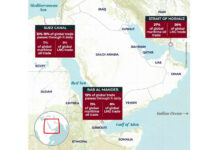
Tehran is using the pause to push for a broader political settlement. The city has floated a new multi‑point proposal, reported as a 14‑point plan, to Washington through Pakistani mediators. The plan reportedly calls for an end to attacks on Iranian sites, a lifting of the naval blockade, the release of Iranian financial assets frozen abroad, and guarantees over freedom of navigation in the Strait of Hormuz.
In Washington, President Trump has publicly rejected earlier Iranian offers and is treating the latest proposal with deep skepticism. He has signaled that renewed strikes could return “anytime,” keeping pressure on Tehran while giving the appearance of review.
An Economy under strain
Inside Tehran, the war and sanctions have left a heavy economic footprint. Inflation has soared well above 70 percent in recent estimates, currency value has weakened, and prices for basic goods, fuel, and imported items have climbed sharply. Ordinary residents report tighter budgets, longer queues for essentials, and visible anxiety over how long the pause can last before prices jump again.
The broader US–led naval blockade and sanctions have also limited Tehran’s access to foreign trade and finance, making it harder for businesses in the capital to import machinery, spare parts, and even some foodstuffs. Street‑level traders and small‑business owners in Tehran complain about rising costs, shrinking customers, and uncertainty about the next round of sanctions or attacks.
Security, propaganda, and daily life
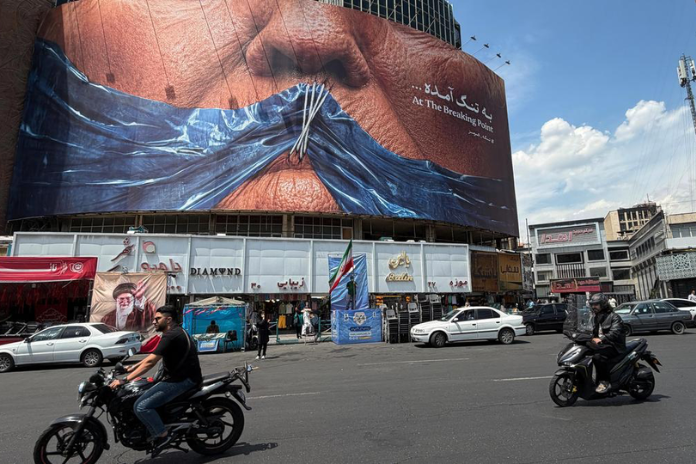
Even in this wartime pause, Tehran feels heavily securitized. Security forces maintain a visible presence in sensitive areas, checkpoints can appear with little notice, and state media constantly reminds citizens of the perceived threat from the United States and its allies. Large anti‑US billboards in central Tehran, including ones targeting President Trump, underline the regime’s attempt to channel public anger into a controlled nationalist narrative.
At the same time, many residents quietly navigate the contradictions of life in the capital: loud patriotic rallies on some streets, subdued conversations behind closed doors, and a new generation more connected to global media than to state‑run propaganda. Cafés, parks, and malls remain open, but the shadow of possible conflict and economic hardship hangs over even routine outings.
Protests and repression in Tehran
Tehran’s recent history is also marked by waves of protest. Earlier in 2026, unrest in the capital and other cities led to hundreds of reported deaths and thousands of arrests, with human‑rights groups accusing authorities of using live fire and harsh crackdowns. Many of those detained were later tried in closed‑door courts on charges such as “spying” or “armed uprising,” further chilling public dissent.
In recent weeks, Tehran has seen several high‑profile executions linked to these cases, including alleged spies and political opponents. These measures have tightened the atmosphere in the capital, discouraging street demonstrations while deepening distrust between sections of the population and the security establishment.
What “What’s happening in Tehran” means today
So, what’s happening in Tehran today? The city is in a liminal space: a ceasefire that could collapse, political talks that may go nowhere, an economy under severe strain, and a social climate shaped by both propaganda and quiet resistance. For observers, Tehran has become a barometer of how close the wider US–Iran confrontation is to a new flare‑up—or a fragile, hard‑won de‑escalation.
Whether the pause holds depends on decisions in Washington, Tehran, and a chain of regional actors, but for people living in Iran’s capital, the immediate reality is one of waiting, watching, and adapting to a deeply uncertain future.