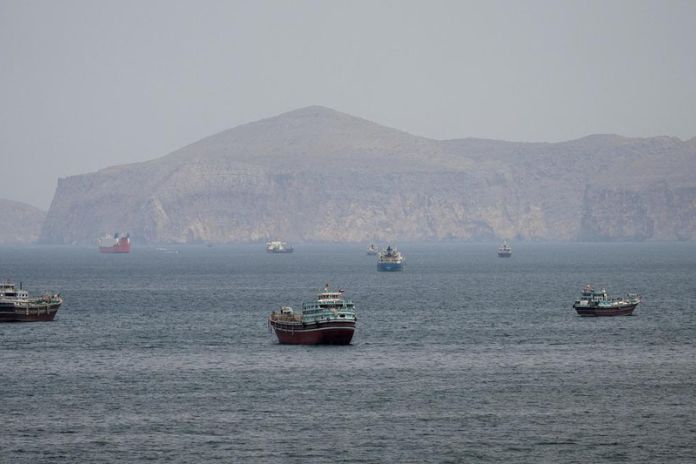
President Donald Trump has issued a stark directive to the U.S. Navy: shoot and kill any boats—especially small ones—caught laying mines in the Strait of Hormuz. This order, announced via social media on April 22-23, 2026, signals a sharp escalation in the ongoing U.S.-Iran conflict. The strait, a narrow waterway between Iran, Oman, and the UAE, handles about 20% of the world’s oil and gas trade. Mining threats have choked shipping lanes since late February, prompting Trump’s no-hesitation response.
Direct Order: No Hesitation Allowed
Trump’s exact words cut through the tension: “I have ordered the United States Navy to shoot and kill any boat, small boats though they may be… that is putting mines in the waters of the Strait of Hormuz. There is to be no hesitation.” He paired this with orders to triple mine-clearing operations using U.S. minesweepers. The goal? Reopen the vital passage fast.
This builds on earlier U.S. actions, like seizing Iranian oil tankers. Larger Iranian vessels were already neutralized, shifting threats to nimble small boats. These speedboats can deploy mines quickly, making them hard to track in the Persian Gulf’s busy waters.
Why the Strait Matters
Map of the Strait of Hormuz from 2004, showing shipping lanes and surrounding countries Iran, Oman, and UAE.
The Strait of Hormuz is just 21 miles wide at its narrowest, with shipping lanes only 2 miles across. It’s the world’s most critical oil chokepoint. Disruptions here spike global energy prices and threaten economies worldwide, including India’s heavy reliance on Gulf imports.
This 2004 map shows the Strait of Hormuz’s layout, highlighting its vulnerability to blockades or mines from Iran’s northern coast.
Since March, U.S. officials reported Iran deploying sea mines here, worsening a blockade tied to broader war. Iran’s tactics aim to counter U.S. naval dominance, but Trump’s order flips the script.
Escalation in U.S.-Iran Standoff
USS Porter (DDG-78) guided-missile destroyer transiting the Strait of Hormuz during its U.S. 5th Fleet deployment in May 2012.
The directive comes amid live updates of ceasefire talks stalling. Iran has rejected negotiations while facing U.S. blockades. No shots fired yet under the new rules, but risks are sky-high. Navy destroyers like the USS Porter have long patrolled these waters.
A U.S. Navy destroyer transits the strait, underscoring America’s long presence amid rising threats.
Global media from CNBC to Al Jazeera covered the buzz, with YouTube clips amplifying Trump’s aggressive tone. Daily Sabah noted the focus on “destroying mine-laying vessels.”
Broader Implications
For India, this hits close: Kanpur and Uttar Pradesh feel oil price swings directly. As a journalist tracking West Asia, watch for trade ripples—higher fuel costs could slow growth. Trump’s reelected stance prioritizes U.S. interests, echoing past “maximum pressure” on Iran.
No full war declaration, but this “shoot-to-kill” policy marks a red line. Will Iran back down or double down? Markets brace as minesweepers ramp up.