India’s retail inflation edged higher to 3.4% in March 2026, up from 3.21% in February, according to the National Statistics Office (NSO). This reading uses the new Consumer Price Index (CPI) series based on the 2024=100 benchmark, improving accuracy with broader item coverage and digital market data.
Updated CPI Framework
Launched earlier in 2026, the revised CPI now tracks 358 items—up from 299—and includes more urban and online sources. The series debuted with January inflation at 2.75%, providing a fresh lens on consumption shifts. March’s uptick highlights early stability in this modernized system.
Primary Inflation Triggers
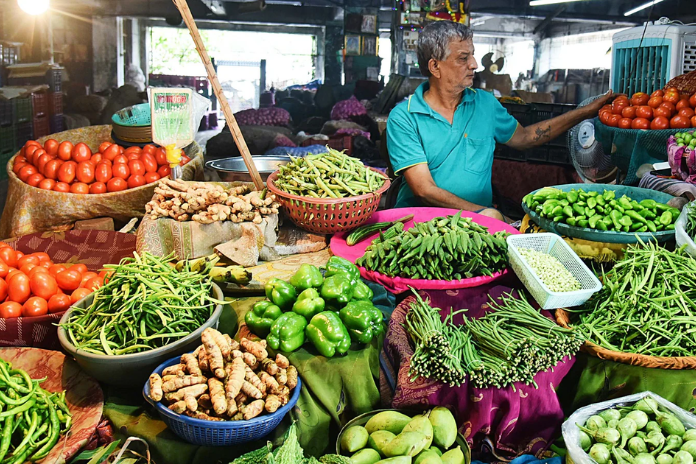
Food inflation jumped to 3.87% from 3.47%, driven by rises in vegetables, pulses, and proteins. The US-Iran conflict in West Asia disrupted supplies, pushing prices up. Fuel edged to 2.3%, while rural CPI (3.6%) outpaced urban (3.2%).
| Category | February 2026 | March 2026 | Change |
| Overall CPI | 3.21% | 3.4% | +0.19% |
| Food | 3.47% | 3.87% | +0.4% |
| Fuel & Light | 2.1% | 2.3% | +0.2% |
| Rural CPI | 3.4% | 3.6% | +0.2% |
| Urban CPI | 3.0% | 3.2% | +0.2% |
Economic Backdrop
The 3.4% rate remains under the RBI’s 4% target, supporting potential policy easing. Core inflation (sans food/fuel) stays tame below 4%. Global risks like energy volatility loom, but strong base effects may moderate future prints.
Policy and Consumer Impact
RBI may hold steady on rates to balance growth and prices. Households face grocery hikes, but broad stability preserves purchasing power. A solid monsoon could relieve food strains later in 2026.
This NSO update under the 2024 CPI base equips economists and citizens with reliable insights amid global flux. Watch for April figures.