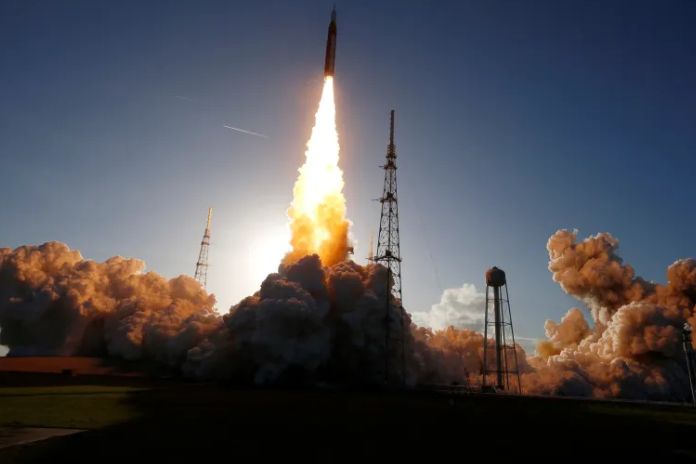
NASA has achieved a monumental milestone with the successful launch of the Artemis II moon mission on April 1, 2026. This historic event marks the first crewed flight to the Moon since Apollo 17 in 1972, propelling four astronauts into a 10-day journey around the lunar surface.
Meet the Trailblazing Crew
The Artemis II team consists of NASA astronauts Reid Wiseman as commander, Victor Glover as pilot, and mission specialist Christina Koch, alongside Jeremy Hansen from the Canadian Space Agency. This diverse group shatters barriers: Glover becomes the first person of color, Koch the first woman, and Hansen the first non-American to venture beyond low Earth orbit.
The crew lifted off aboard the Orion spacecraft, powered by NASA’s Space Launch System (SLS) rocket from Kennedy Space Center’s Launch Pad 39B at 6:35 p.m. EDT.
Mission Goals and Trajectory
Artemis II follows a free-return lunar trajectory, skimming within 4,700 miles of the Moon’s far side. Key tests include Orion’s life support systems, propulsion, and high-speed reentry capabilities. Astronauts will conduct handling checks, health experiments like AVATAR, and deep-space operations vital for future missions.
After reaching orbit and deploying solar arrays, the spacecraft is slated for translunar injection on April 2. This uncrewed test flight validates systems before Artemis III’s lunar landing targeted for 2028.
Overcoming Launch Challenges
The mission faced setbacks including hydrogen leaks, helium supply issues, and heat shield concerns. Engineers resolved these through trajectory tweaks, ensuring a safe countdown. Live updates from NASA confirmed a flawless liftoff, with the rocket’s massive plume lighting up Florida’s evening sky.
Path to Lunar Return and Mars
Artemis II is a cornerstone of NASA’s Artemis program, aiming for sustainable Moon presence via a planned lunar base. It fosters international collaboration through the Artemis Accords and lays groundwork for Mars expeditions. Success here boosts confidence in Orion’s reliability for longer deep-space voyages.
As of April 2, 2026, the crew reports nominal systems, with global audiences tracking progress via NASA’s live feeds. This launch reignites humanity’s lunar ambitions, blending cutting-edge tech with human grit.